

Deriv.com Login Guide for Kenyan Traders
🔑 Step-by-step guide for Kenyan traders on Deriv.com login, account setup, security tips, common issues, and smart platform use. Trade confidently! 📈
Edited By
Laura Mitchell
Fusion Markets stands out as a competitive online trading platform, especially for Kenyan traders looking to access global financial markets without breaking the bank. It offers a straightforward interface, a range of trading instruments, and notably low fees. This makes it an attractive choice for those who want to trade forex, indices, commodities, and cryptocurrencies from Kenya.
Unlike many brokers that charge high commissions or widen spreads, Fusion Markets aims to keep trading costs down, which can significantly impact a trader's profitability over time. For example, Kenyan traders can start with low minimum deposits and benefit from fee structures that are transparent and competitive compared to local alternatives.

The platform supports multiple payment methods, including M-Pesa, which is a game changer for Kenyan users as it simplifies funding accounts and withdrawing profits directly using a familiar and trusted service. This local integration removes a common barrier many Kenyans face with international brokers.
From a regulatory perspective, Fusion Markets operates under reputable licences that provide a safety net for users. This is particularly reassuring for Kenyan traders accustomed to the risks of unregulated trading platforms. While not regulated by Kenyan authorities directly, their compliance with international standards reduces the odds of fraud or fund mismanagement.
Remember, while Fusion Markets offers access to international markets, Kenyan traders should always factor in currency conversion rates, transaction fees, and the impact of foreign exchange movements on their trading capital.
Here are a few quick facts Kenyan traders should know about Fusion Markets:
Low trading fees and tight spreads reduce overhead costs.
Offers access to major currency pairs, global indices, commodities like gold and oil, and popular cryptocurrencies.
Supports fast deposit and withdrawal through M-Pesa, bank transfers, and other popular payment gateways.
User-friendly trading platform with both desktop and mobile versions, catering to busy traders on the go.
Provides educational resources and customer support that can be accessed conveniently from Kenya.
In summary, Fusion Markets provides Kenyan traders with a practical way to engage in global trading, leveraging low costs and local payment methods. Understanding its features and fee setup helps traders make informed decisions to grow their portfolios confidently.
Knowing what Fusion Markets brings to the table is key for Kenyan traders considering this platform. It helps you assess whether its features match your trading needs, how it fits into the local trading environment, and what advantages it offers over other brokers. This section takes a clear look at Fusion Markets’ platform, account options, and financial instruments, revealing practical benefits and choices you'll want to weigh.
Fusion Markets uses the MetaTrader 4 (MT4) platform, a trusted choice in the trading community for its reliability and ease of use. MT4’s interface is straightforward, allowing traders to place orders, analyse charts, and use automated trading via Expert Advisors (EAs). For Kenyan traders new to online markets, the simple layout makes it easier to navigate without getting lost in unnecessary complexity. The platform supports both desktop and mobile apps, so whether you're trading from your laptop in Nairobi or on your phone during a matatu ride, you'll have access to your trades.
Fusion Markets offers round-the-clock access to global markets, with trading hours tailored to major exchanges around the world. Since forex markets are open 24 hours on weekdays, you can trade the popular EUR/USD or USD/JPY pairs at almost any time that fits your schedule. This flexibility suits Kenyan traders who might want to place trades before starting work or late into the evening. The platform also supports commodities and indices traded on standard exchange times, allowing you to diversify within the same account.
The broker provides several account types to suit different trading styles and capital sizes. For instance, ‘Standard’ accounts have zero commission and slightly wider spreads, which benefits casual traders not looking to trade in huge volumes. Meanwhile, ‘Raw Spread’ accounts offer very tight spreads with a small commission fee per trade, ideal for active traders or those using scalping strategies. This flexibility means Kenyan traders can pick an account that balances cost and trading method effectively.
Fusion Markets focuses heavily on forex, offering over 45 currency pairs that include majors, minors, and emerging market currencies. For Kenyan traders, this means you can speculate or hedge against the financial shillings’ value by trading pairs like USD/KES or more liquid pairs like GBP/USD. Commodities like gold, silver, crude oil, and natural gas are available, too, which provide an alternative when currency markets are choppy or to diversify risk.
Fusion Markets gives access to popular stock market indices such as the US30 (Dow Jones), UK100 (FTSE 100), and GER30 (DAX). Trading indices offers a way to profit from broader market trends without selecting single stocks. The platform also lists several cryptocurrencies like Bitcoin, Ethereum, and Litecoin, which can appeal to younger or more adventurous traders in Kenya looking to add digital assets to their portfolio.

In addition to forex and commodities, Kenyan traders can trade Contract for Differences (CFDs) on stocks from major global companies. This means you can take positions on firms like Apple or Tesla without owning the actual shares, benefiting from price movements in both directions. Other derivatives like options or futures are not the main focus here, making the platform simpler for those concentrating on spot trading and CFDs.
Fusion Markets packs enough variety and choice for Kenyan traders who want global market access combined with user-friendly features and flexible account options, supporting thoughtful and varied trading strategies.
Understanding the fee structure and pricing details is key when choosing a trading platform like Fusion Markets. These costs directly affect profitability, especially for Kenyan traders who pay attention to every shilling spent on trading activities. Knowing how much spreads, commissions, and other fees add up can help traders plan their strategies more effectively.
Fusion Markets is known for offering low spreads and clear pricing, which benefits traders by reducing their direct trading costs. Spreads represent the difference between the buying and selling prices of a financial instrument. Lower spreads mean smaller gaps, so traders don’t lose much when entering or exiting trades. For example, when trading major forex pairs like EUR/USD, Fusion Markets often offers spreads as low as 0.1 pips, compared to wider spreads on many other platforms.
This transparency in pricing helps traders avoid unexpected costs. Fusion Markets publishes its spread data openly, so you can see what to expect before you trade. For Kenyan traders dealing in tight margin markets or scalping strategies, this can make a noticeable difference in overall gains.
Regarding commission charges, Fusion Markets adopts a model that varies by account type. The standard account often features commission-free trading but with slightly higher spreads. Conversely, the low-cost 'Raw Spread' account applies tight spreads combined with a fixed commission per trade, typically charged per 100,000 units traded.
For example, a Raw Spread account might charge around USD 3.50 in commission per 100,000 units, which translates roughly to KSh 430. While this adds a direct fee, the sharp spreads can lead to lower total trading costs compared to standard accounts. This option suits active Kenyan traders seeking the best price execution at reasonable commission fees.
Swap or overnight fees are of significant interest, especially for traders holding positions past market close. Fusion Markets charges or pays swap rates depending on the direction of the trade and the currency pair involved. Overnight fees reflect the interest rate difference between currencies, making them crucial for swing traders or those holding forex positions days at a time.
Being aware of these costs helps prevent surprise deductions. For instance, if you hold a long position on USD/JPY for several nights, your account might be charged a swap fee reflecting Japan’s lower interest rate relative to the US. Kenyan traders who manage overnight risk carefully can avoid unnecessary costs by closing positions before rollover times.
Regarding inactivity fees and deposit/withdrawal charges, Fusion Markets maintains a fairly straightforward policy. There's often an inactivity fee applied after a period of no trading activity—usually after 12 months—to keep unused accounts in check. This fee is generally nominal but worth keeping in mind if you plan to pause trading.
Deposits and withdrawals at Fusion Markets usually have transparent costs, but Kenyan traders should be mindful of using local methods like M-Pesa or bank transfers. While the platform itself may not charge for deposits, Kenyan banks or mobile money services might impose transaction fees. Withdrawal charges and timelines vary depending on the payment method, so planning ahead helps prevent delays or extra costs.
Careful consideration of all fees—from spreads and commissions to swaps and withdrawal costs—can enhance your trading experience with Fusion Markets and safeguard your capital in the long run.
By understanding these pricing details in the context of your trading style and financial goals, you will be able to choose the best account type and manage your expenses wisely.
Understanding the regulatory status and security measures of a trading platform is vital for Kenyan traders. These aspects ensure that your investments are protected and that the platform operates within legal frameworks you can trust. Fusion Markets, as an international broker, maintains regulatory oversight and robust security standards to safeguard its clients' interests.
Fusion Markets is regulated by the Australian Securities and Investments Commission (ASIC), one of the more reputable financial regulators globally. ASIC's oversight means Fusion Markets must adhere to strict rules concerning transparency, fair trading practices, and financial reporting. For Kenyan traders, dealing with an ASIC-regulated broker provides a layer of confidence that the platform is monitored continuously and meets high operational standards.
While Fusion Markets does not hold local Kenyan regulatory approval, its international regulation still matters here. Kenyan traders often use international brokers regulated by strong authorities like ASIC, UK’s FCA, or CySEC. Still, it’s wise to cross-check that the broker offers safeguards relevant to your region, like clear complaint procedures and responsive customer support.
For traders in Kenya, Fusion Markets' regulation by ASIC means access to a broker that has a strong compliance culture. You are less likely to encounter unscrupulous behaviour such as hidden fees or unfair execution. Moreover, if issues arise, ASIC provides a formal complaint and dispute resolution process, which is not always guaranteed with unregulated brokers.
That said, Kenyan traders should remain aware that local laws do not cover international brokers fully. It’s crucial to treat such brokers as foreign entities and ensure you understand the risks and the protections you have, such as through regulatory disclosures and the platform's terms and conditions.
Fusion Markets maintains segregated client accounts, meaning your funds are kept separate from the company’s operational money. This structure protects your deposits if the broker encounters financial trouble. For example, in 2021, some brokers faced difficulties, leaving clients scrambling to recover funds—a segmented account system would have shielded those clients.
Kenyan traders will find this reassuring because even though the broker operates offshore, client money safeguards are in place. Segregated accounts also help with transparency during audits and make it harder for the broker to use client funds irresponsibly.
On the technology front, Fusion Markets employs high-level encryption to secure user data and transactions. This reduces risks associated with hacking or data theft in online trading. The platform also has two-factor authentication (2FA), which Kenyan users can enable to add another security layer when logging in.
Besides, the platform undergoes regular security audits to check for vulnerabilities. These measures align with international best practices, providing Kenyan traders with peace of mind when using Fusion Markets, especially since cybercrime targeting financial accounts is a growing concern globally and locally.
Opting to trade with a well-regulated platform like Fusion Markets not only ensures legal compliance but also provides practical protection of your funds and personal information.
Overall, considering regulatory and security factors helps Kenyan traders choose brokers that align with their risk appetite and offer dependable trading frameworks. Fusion Markets demonstrates a solid approach on both fronts, making it a serious contender for those looking beyond local brokerage options.
Choosing Fusion Markets as your trading platform from Kenya offers several practical benefits. It provides access to global markets like forex, commodities, and stock CFDs with low fees, which suits Kenyan traders aiming to optimise their investments without losing much to charges. Additionally, the platform’s easy usability and localised payment options make it a solid choice for people trading from Nairobi, Mombasa, Kisumu, and beyond.
Opening an account on Fusion Markets requires basic identification and proof of residence. Kenyan users typically need a valid national ID or passport and a recent utility bill or bank statement showing their address. These documents help verify your identity and comply with international anti-money laundering rules, ensuring your funds stay secure.
Registering is straightforward and can be completed online in minutes. You start by filling personal details, upload the required identification, and then submit the residence proof. After these steps, Fusion Markets reviews your documents. Once approved, you receive a confirmation and can start funding your account to trade.
Fusion Markets supports deposits via M-Pesa, which is vital for Kenyan traders who prefer mobile money for fast, convenient payments. Alternatively, bank transfers to and from local banks are available, but they might take longer. Both options are reliable, letting you fund your trading account without the usual hassles of international transactions.
Withdrawals to M-Pesa wallets are usually processed within 24 to 48 hours, making it easy to access your earnings quickly. Bank transfers may take a bit longer, sometimes up to five working days. Fusion Markets applies minimal withdrawal fees, but you should also check with your bank or M-Pesa provider for any additional charges.
Before risking real money, use Fusion Markets' demo accounts to familiarise yourself with the platform and test your strategies. Demo trading replicates live market conditions without financial risk, helping you build confidence and sharpen your skills.
Stay updated on local economic events and market news from Kenyan sources like Business Daily, The Standard, or K24. Having timely information on topics like inflation rates, Central Bank of Kenya announcements, or political developments can greatly influence your trading decisions on Fusion Markets.
Taking time to learn the platform and keeping an eye on local economic news improves your chances of success when trading with Fusion Markets from Kenya.
🔑 Step-by-step guide for Kenyan traders on Deriv.com login, account setup, security tips, common issues, and smart platform use. Trade confidently! 📈
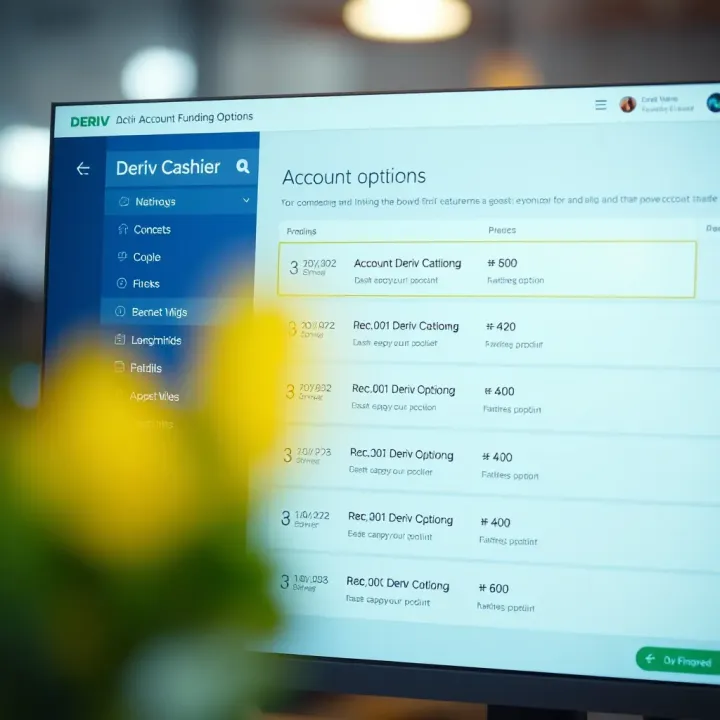
Explore how Kenyan traders can smoothly use Deriv Cashier 🏦 to fund accounts, withdraw securely, and troubleshoot issues for hassle-free trading.

Explore Binary.com with a focus on Kenyan traders 🇰🇪. Learn about platforms, account types, regulations & tips to navigate risks confidently 📈💡.

📱 Discover how to navigate the Deriv.com app with ease: setup, trading tips, security, withdrawals, and solid support—perfect for Kenyan traders!
Based on 9 reviews