
Deriv Minimum Deposit Guide for Kenyan Traders
💼 Learn about Deriv minimum deposit options for Kenyan traders, including payment methods, currency tips, and security advice for smooth funding.
Edited By
James Harrington
HFM, formerly known as HotForex, stands out among forex brokers as a popular choice for Kenyan traders. If you're setting out to trade forex with HFM, understanding their minimum deposit requirements is key to managing your funds effectively.
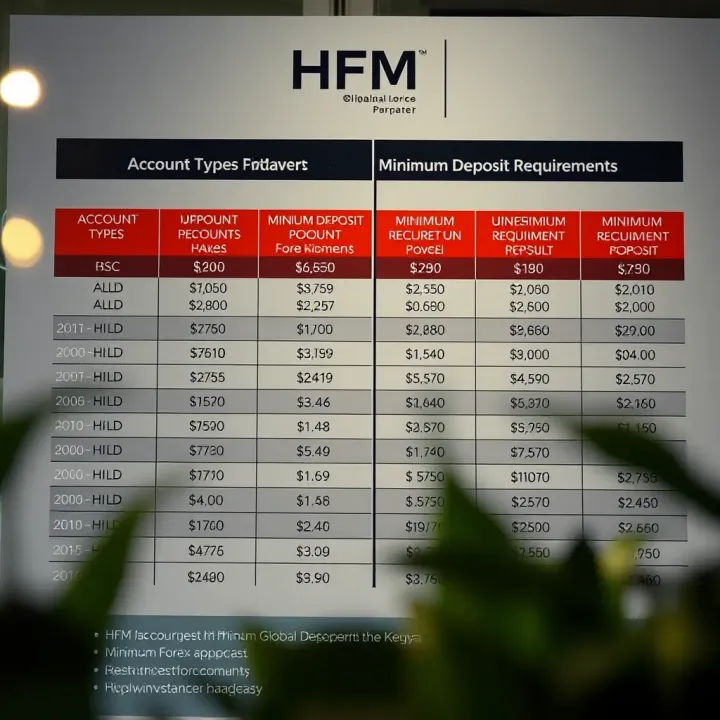
HFM offers several account types, each with its own deposit rules. For example, the Micro Account requires a minimum deposit of just KS,000, making it accessible to beginners or traders with limited capital. Conversely, the Zero Spread Account and other premium options might call for deposits ranging between KS0,000 and KS0,000. Knowing these numbers before signing up helps you pick an account that suits your trading budget.
Starting with the right deposit size can affect your trading leverage, available instruments, and the overall cost structure, so don’t take it lightly.
Kenyan traders benefit from several deposit options to fund their HFM accounts. M-Pesa remains the most commonly used method due to its convenience and wide reach. Other options include local and international bank transfers, credit/debit cards, and e-wallets such as Skrill or Neteller. While M-Pesa deposits are usually instant, bank transfers might take a couple of days.
Most deposits via M-Pesa or cards usually come without fees from HFM, but your bank or service provider might impose a small charge. It's wise to confirm any potential fees beforehand. This clarity helps you avoid surprises that can chip away at your trading capital.
Your deposit size affects the types of trades you can make. Larger deposits generally unlock higher leverage and access to more instruments like CFDs on commodities or indices. Smaller deposits mean more modest leverage, which can be safer if you’re new but might limit your potential profits.
In practice, a deposit of KS,000 in a Micro Account could let you trade mini lots, whereas KS0,000 in a premium account allows for more flexibility and a wider choice of markets.
Choosing a deposit amount that aligns with your risk tolerance and trading goals will set you up for better results.
Understanding these deposit requirements saves you from surprises and helps you prepare better for your trading journey with HFM. As Kenyan investors, taking these factors into account ensures you use your hard-earned KSh wisely.
Understanding HFM's background and the trading accounts it offers is a good starting point for traders in Kenya. This knowledge helps to match the right account type with your trading style and budget while considering the broker’s standing within local and international markets.
HFM, short for HotForex Markets, is a well-established online forex broker founded in 2010. It has gained a solid reputation globally for offering diverse trading instruments like forex pairs, commodities, indices, and cryptocurrencies. For Kenyan traders, it offers direct access to the forex market through its platform with competitive conditions.
HFM is popular among Kenyan traders because it caters to both beginners and experienced investors. Kenyans appreciate flexible minimum deposit levels and the option to use convenient payment channels such as M-Pesa. Moreover, HFM provides localised support and educational resources tailored to the Kenyan trading environment, which builds trust and encourages wider adoption.
Regarding regulations, HFM is licensed and regulated in multiple jurisdictions, including Cyprus (CySEC) and the Seychelles. While HFM is not regulated by the Capital Markets Authority (CMA) Kenya, many traders use it due to its international compliance and safety measures. Still, traders are advised to be mindful of the regulatory differences and trade responsibly.
HFM offers several account types tailored to various trading needs, chiefly the Micro, Premium, and Zero Spread accounts. The Micro account is suitable for new traders or those with smaller capital, as it requires a lower minimum deposit and offers smaller trade sizes. The Premium account targets traders who want tighter spreads and access to more leverage, often with higher deposit requirements. Zero Spread accounts provide almost no spread costs but charge commissions, appealing to scalpers and high-volume traders.
The differences between these accounts often revolve around leverage, spreads, and commissions. For example, the Zero Spread account can offer leverage up to 1:500 with spreads starting at zero pips but includes a commission per trade. The Micro account spreads might be wider, sometimes around 1 pip, but it usually has no commissions. These distinctions affect trading costs and potential profits, important for Kenyan traders managing tight budgets.
For Kenyan users, account features such as acceptability of mobile money payments (notably M-Pesa), fast account setup, and availability of Swahili customer support add practical value. Additionally, HFM accounts support MetaTrader platforms, widely used in Kenya, making technical analysis and order execution straightforward for local traders.
Matching your trading goals with the appropriate HFM account type and understanding regulatory and payment contexts can save costs and improve trading efficiency in Kenya.
This section lays the groundwork for deeper discussions on deposit requirements and funding processes tailored to Kenyan traders.
Understanding the minimum deposit requirements for each HFM account type is vital for every trader in Kenya. These deposits directly influence your trading capabilities, access to various instruments, and risk exposure. Knowing them helps you pick the right account that matches your budget and trading style.
Micro account deposit requirements
The Micro account is the most accessible for beginner traders or those who want to start small. HFM requires a minimum deposit of just KSh 1,000 (about $10), which suits Kenyans testing the waters without risking a big lump sum. This low entry point allows new traders to practise live trading with real money but limited exposure, making it ideal for learning risk management.
Premium account minimum deposit
For more experienced traders aiming for better leverage and trading conditions, the Premium account demands a higher minimum deposit, typically KSh 10,000 to KSh 15,000 (roughly $100 to $150). This deposit unlocks tighter spreads and access to additional trading tools. Increased capital in the Premium account supports bigger position sizes, offering a smoother balance between affordability and serious trading.
Zero Spread account expectations
The Zero Spread account usually requires at least KSh 30,000 (around $300) to start. It’s designed for traders prioritising low-cost execution without the typical spread markups. While commissions apply, the near-zero spreads can save costs, especially in high-frequency or scalping strategies. This account type appeals to those with larger starting capital who want to cut down on trading expenses.
How deposit level affects leverage and margin
Your deposit size influences both leverage and margin requirements. For smaller deposits, leverage options might be limited to reduce risks—for example, 1:100 leverage on a Micro account versus potentially higher leverage on Premium or Zero Spread accounts. This means with a bigger deposit, you can control larger trades with less margin, but the risks also grow proportionally.
Access to different instruments based on deposit
Certain assets or exotic currency pairs may only be available if your deposit reaches a specific threshold. For example, HFM may restrict access to commodities or indices unless the account balance hits the Premium or Zero Spread levels. Simply put, bigger deposits open the door to a broader range of markets, enabling Kenya-based traders to diversify their portfolios suitably.
Risk management considerations
Managing risk becomes easier with a clear understanding of deposit size impacts. With small deposits such as the Micro account minimum, traders must keep position sizes small to avoid margin calls. Larger deposits allow more flexibility to spread investments across different trades and strategies. Yet, tempting as it may be to go all in with a bigger deposit, it’s wise to stick to risk limits that suit your trading experience and financial capacity.
When selecting your account, balance your deposit size with trading goals and risk appetite to maximise your long-term success.
In summary, knowing the minimum deposits at HFM helps Kenyan traders decide where to start and how to scale up. Starting small is not a drawback; rather, it ensures you learn in a controlled environment. On the flip side, higher deposits grant access to improved trading conditions but demand stricter discipline.
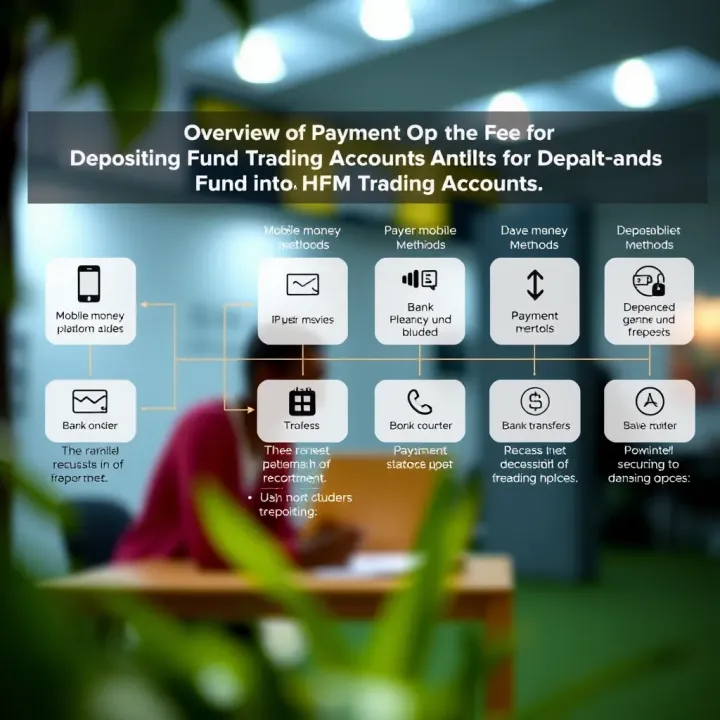
Funding your HFM trading account smoothly is essential for timely market access and managing your trades without hitches. For Kenyan traders, knowing the accepted payment methods, deposit timelines, and fees helps plan your investments efficiently and avoid unexpected delays or costs.
Mobile money services like M-Pesa have revolutionised the way Kenyans send and receive funds, and HFM supports this convenient mode for deposits. Sending money via M-Pesa is fast and accessible from almost anywhere in Kenya, making it a natural choice for many traders. For instance, you can transfer your funds directly from your M-Pesa account to HFM's nominated payment gateway without the need for bank visits or card details.
Besides M-Pesa, other mobile money platforms like Airtel Money may be supported depending on HFM's current payment partners. This flexibility reduces the barriers for traders who may not have traditional banking accounts but still want to join forex markets.
Bank transfers are widely accepted for funding HFM accounts. Traders can use their local bank accounts from Equity Bank, KCB, Co-operative Bank, or others to send deposits directly. This method suits those who prefer wiring larger sums securely or who want to keep electronic trails for their trading activities.
Card payments using Visa or MasterCard debit and credit cards are also an option. They offer quick processing times and are practical for traders wanting instant account top-ups. However, be mindful of your bank’s foreign transaction fees, as these can add up if you top up frequently.
HFM also supports other payment methods like e-wallets (Skrill, Neteller) and online payment platforms. These options are useful if you trade frequently internationally or prefer multi-currency handling.
While not as common in Kenya as M-Pesa or bank methods, these alternatives offer extra convenience and sometimes lower fees. Each wallet or platform has its own verification and deposit rules, so check beforehand.
Deposits via M-Pesa or card payments often reflect almost instantly or within a few minutes, allowing fast trade execution and responsiveness to market movements. Bank transfers, depending on the sending and receiving banks, can take from a few hours up to 2 business days, especially if you are depositing on non-working days.
Planning ahead is crucial. For example, if you're funding your HFM account on a Friday evening via bank, the funds may only appear the following Monday, causing missed opportunities.
Transaction fees vary by payment method. M-Pesa charges a small transfer fee, usually under KSh 50 for amounts in the typical deposit range, but some banks apply higher charges for international card transactions or wire transfers.
To avoid unnecessary fees, consider these tips:
Use M-Pesa for smaller deposits to keep costs low.
Increase deposit size to reduce the frequency of transfer fees.
Check with your bank if they offer fee waivers for certain transfer types.
For hassle-free deposits, always double-check the payment details before sending. Mistyping account numbers or payment references can delay the process or cause funds to go missing.
You should also complete your HFM account verification first. Verified accounts usually enjoy quicker deposit processing and fewer hold-ups.
Lastly, keep your payment confirmations until the deposit reflects, just in case you need to reconcile any discrepancies with HFM support.
Being aware of the preferred payment methods, associated costs, and timelines can save you time and money when funding your HFM account from Kenya. Use mobile money options like M-Pesa when possible, plan bank transfers ahead, and always verify your payment details for swift access to forex trading.
Before you invest a shilling with HFM, preparing well for your first deposit is vital. This step isn't just about transferring funds; it’s about making sure you meet all requirements and understand your financial limits to trade wisely. Getting these right helps avoid delays and ensures your trading starts smoothly.
HFM follows strict regulations requiring traders to verify their accounts under KYC (Know Your Customer) rules. Typically, you will need to submit a government-issued ID such as a Kenyan national ID or passport. A recent utility bill or bank statement (dated within the last three months) must also be provided to confirm your address. This process helps HFM comply with global anti-money laundering laws.
Completing verification can affect your deposit options. Without full verification, you might face lower deposit limits or restrictions on withdrawal amounts. For example, an unverified account might only allow deposits up to KSh 10,000, while a verified one enables higher limits. This step protects you and the broker by ensuring transactions are legitimate.
Common verification hiccups include submitting documents that are blurry, expired, or mismatched in name and details. Delays often arise if the uploaded utility bill is older than the allowed date range or if your ID picture is unclear. To avoid these, scan documents carefully and check expiry dates before uploading.
Assessing your risk appetite means knowing how much loss you’re comfortable with before starting to trade. For instance, if losing KSh 5,000 would upset your finances, it’s wise to start with a smaller deposit. Trading with money you can afford to lose helps reduce stress and keeps your decisions clear-headed.
Your deposit size should also match your trading goals. If you aim to trade small, steady profits, starting with HFM’s Micro account and a modest deposit of around KSh 1,000 to KSh 5,000 makes sense. However, if you plan to trade larger volumes or access special features like lower spreads in the Premium account, you’ll need to budget a higher deposit accordingly.
Managing your funds practically involves setting aside a dedicated trading budget separate from daily expenses. Use tools like Excel sheets or mobile budgeting apps to track deposits, withdrawals, and gains carefully. Avoid the temptation to chase losses by adding more funds impulsively—consistency beats speed in forex trading.
Taking time to prepare your first deposit with clear verification and budget plans helps you trade confidently and avoid unnecessary headaches down the road.
💼 Learn about Deriv minimum deposit options for Kenyan traders, including payment methods, currency tips, and security advice for smooth funding.
📈 Learn how to sign in to Deriv easily, fix login issues, secure your account, and explore key platform features tailored for Kenyan traders.

Looking for the best trading platform in Kenya? Discover tips on security, fees, and features to find a reliable, user-friendly platform that fits your needs 📈💼

📱 Discover how to choose the best trading app in Kenya! Learn key features, security tips, and regulations to trade confidently on your mobile device.
Based on 7 reviews