
How to Use Deriv with M-Pesa in Kenya
Learn how to connect Deriv with M-Pesa for smooth trading in Kenya 📱💹. Get practical tips, benefits, and safety advice for hassle-free transactions.
Edited By
Liam Parker
Instant Pesa has become a vital part of how many Kenyans handle daily financial transactions. It offers a quick and convenient way to send and receive money using mobile phones, a service that fits right into the fast-paced life in Kenyan cities and towns alike.
Unlike traditional banking methods, where one might queue for ages or deal with paperwork, Instant Pesa works on the go. Whether you are a trader needing to pay a supplier across the county or an investor transferring funds remotely, Instant Pesa cuts down on time and hassle.
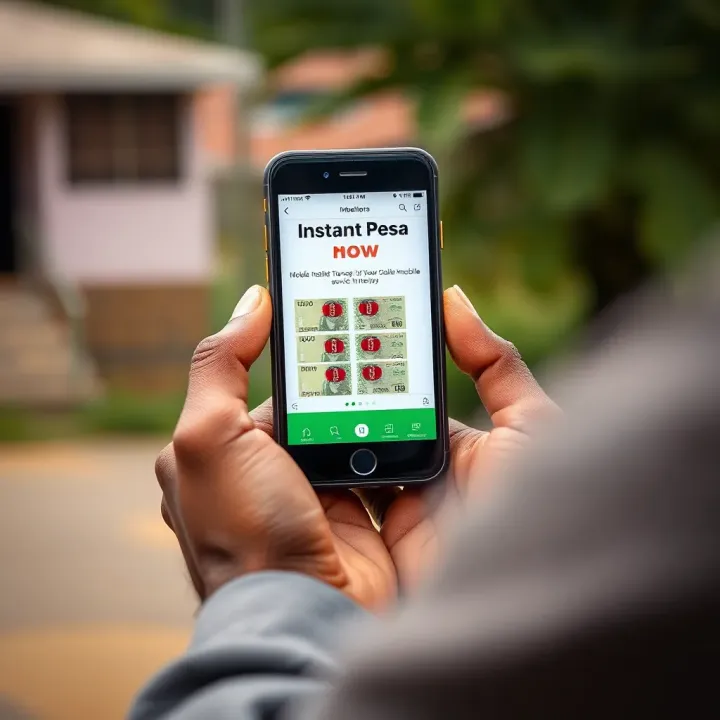
What makes Instant Pesa stand out is its speed and ease of use. Users handle transactions through USSD codes or a dedicated app, often requiring just a few taps or dialling a short code. This means even users without smartphones can comfortably transact. Moreover, the service ties into Kenya’s dominant mobile money ecosystem, including platforms like M-Pesa, allowing seamless interoperability.
Instant Pesa supports real-time transfers, allowing funds to appear instantly in the recipient’s account. This feature is particularly valuable for businesses and individuals who value liquidity and speed in cashflow.
Users can use Instant Pesa to:
Settle payments for goods and services
Send money to family or employees
Receive payments for sales or loans
Deposit funds into personal or business accounts
Security remains a top priority with Instant Pesa. Transactions require PIN codes, and firms behind the service invest in fraud detection. However, as with all mobile money services, users must stay vigilant against scams like phishing or SIM swaps.
In the bigger picture, Instant Pesa empowers economic activities by making money movement more accessible across all economic levels. Its impact stretches from the bustling markets of Nairobi to remote farming areas, supporting Kenya’s digital economy growth.
Understanding Instant Pesa gives traders, investors, and finance professionals insight into a tool that shapes how business and personal finance flow daily in Kenya. This knowledge can help you better leverage the convenience and agility this service offers in your operations and financial planning.
Understanding Instant Pesa begins with knowing how it fits into Kenya's mobile money ecosystem. As a fast mobile money service, Instant Pesa simplifies sending and receiving money, which is vital for traders, brokers, and finance professionals who need quick cash flow management. Its relevance lies in the practical benefits it offers: speed, accessibility, and ease of use, especially in a market where M-Pesa dominates but alternative methods increase flexibility.
Instant Pesa is a mobile money transfer service that enables users to send and receive funds instantly via mobile phones. It operates mainly through USSD (Unstructured Supplementary Service Data) codes, allowing even users with basic phones to transact without internet access. The service was introduced to complement existing platforms like M-Pesa, providing more competitive transaction fees and quicker processing times for small and medium transactions.
This background matters because Instant Pesa has carved out a niche in Kenya's crowded mobile money scene by focusing on speed and accessibility in everyday transactions. For example, a trader in Kisumu can send money to a supplier in Nairobi within seconds without visiting a bank or needing a smartphone.
Using mobile phones and USSD codes
The core of Instant Pesa's convenience is its use of USSD codes. Users dial a specific code on their mobile phones, enter the recipient’s phone number and amount, and confirm with a PIN. This method works without the need for an internet connection, making Instant Pesa practical for both urban and rural users where data coverage may be patchy. Traders in places like Nakuru or Eldoret find this especially useful because they can complete transactions quickly while on the move.
Integration with M-Pesa and bank accounts
Instant Pesa links directly with the widely used M-Pesa system and major Kenyan bank accounts to facilitate seamless money transfers. This means funds can be sent from an Instant Pesa account to an M-Pesa user, or directly to a bank, and vice versa. Such integration reduces barriers between mobile money and formal banking, allowing businesses and investors to manage finances efficiently. For example, a stockbroker might transfer proceeds from Instant Pesa directly to their Equity Bank account without extra steps.
Typical transaction times
Transactions through Instant Pesa typically complete within seconds to a few minutes, depending on network traffic and operator systems. This is faster than traditional bank transfers, which may take hours or days. Immediate confirmation messages assure users that money has reached the intended party, boosting confidence in timely payments. Quick transaction times are critical for traders needing to pay suppliers promptly or investors reallocating funds to seize market opportunities.
Mobile money services like Instant Pesa have reshaped financial transactions in Kenya by offering rapid, secure, and accessible options beyond traditional banking.
Understanding these mechanics helps you appreciate why Instant Pesa has become a trusted payment option in Kenya's fast-paced financial environment.
Instant Pesa offers several tangible advantages that streamline daily financial activities for Kenyans, especially traders, investors, and finance professionals who need to move money quickly and securely. These benefits go beyond just speed, touching on accessibility and economic empowerment.
One of the main reasons Instant Pesa is popular is its rapid transaction process. Sending money through Instant Pesa often takes just seconds, which can be a lifesaver when paying suppliers or transferring funds for emergency needs. Unlike traditional bank transfers that may take hours or days depending on banking hours, Instant Pesa works round the clock. Traders in busy markets like Gikomba or Eastleigh appreciate how they can instantly confirm payment with suppliers, avoiding delays that disrupt stock availability.
Moreover, the convenience of being able to send money directly from a mobile phone without needing physical cash makes it easier to manage finances on the go. This is particularly useful during Kenya’s short rains season, when travelling roads get slippery, and dealers prefer digital over cash transactions to minimise physical handling.

Instant Pesa has bridged the urban-rural divide by making financial services accessible even in remote areas with poor banking infrastructure. Given that many rural towns and villages have weak or no bank branches, mobile money platforms like Instant Pesa provide a vital link to the digital economy.
Merchants in rural Kisii or Kilifi can receive payments digitally without travelling long distances to banking halls. This accessibility supports livelihoods by keeping business flowing smoothly across the country. Plus, Instant Pesa typically requires minimal internet connectivity or can operate through USSD codes, which suits areas with limited smartphone penetration.
Small businesses, especially those operating in the informal sector like roadside kiosks, boda boda operators, and small-scale farmers, find Instant Pesa very useful. It enables quick payments for services and goods, reducing the risk of carrying cash, which can be unsafe.
For example, a boda boda rider in Nairobi’s Kariobangi can collect payments instantly after a fare, improving their cash flow and enabling them to cover expenses like fuel or maintenance without delay. Similarly, small-scale farmers can receive payments directly from buyers after harvest, eliminating middlemen and increasing profit margins.
Instant Pesa’s combination of speed, reach, and ease of use makes it essential for everyday transactions across Kenya’s diverse economy. It empowers both customers and providers by simplifying payments in a way bank accounts or cash simply cannot match.
By understanding these benefits, traders and finance professionals can better integrate Instant Pesa into their operations to improve efficiency and customer satisfaction.
Security is a key concern for anyone using Instant Pesa given the volume and speed of transactions happening across Kenya. Safeguarding funds and personal details is essential to maintain trust and prevent losses. You need to understand how providers protect your money and data, as well as the common scams targeting mobile money users.
PIN protection and authentication play a central role in safeguarding transactions on Instant Pesa. Every transaction requires a personal identification number (PIN), acting like a digital signature that only the user knows. For instance, if you want to send KSh 5,000 to a friend, you must enter your secret PIN to authenticate the payment. This step prevents unauthorised users from misusing your account even if they access your phone or SIM card.
Providers often layer this with additional authentication methods such as one-time passwords (OTPs) sent via SMS or app notifications to further verify user identity. These measures help prevent fraud even when a phone is lost or stolen, as the attacker would still need your PIN and possibly other codes to complete transactions.
Data encryption and privacy are also vital when handling Instant Pesa transactions. Your transaction details, as well as your personal information, are encrypted during transmission and storage. This means information is scrambled so that hackers or unauthorised parties cannot read or intercept it easily. For example, when you send money through Instant Pesa, the data packets are encrypted before leaving your phone and remain secure until they reach the service provider's servers.
Besides securing data transfers, strict privacy policies limit who can access your information. Providers comply with Kenyan data protection laws, such as the Data Protection Act, which governs how personal data should be collected, stored, and used. This framework helps shield you from identity theft or data misuse.
Phishing and SIM swap attacks are common fraud techniques targeting Instant Pesa users. In phishing, fraudsters send fake messages or calls impersonating your provider to trick you into revealing your PIN or OTP. For example, a user might receive an SMS claiming to be from Instant Pesa support asking them to "confirm" their PIN due to some "system issue." Falling for this can lead to immediate fund theft.
SIM swap attacks involve criminals convincing your network operator to transfer your phone number to a new SIM card they control. Once this happens, the attacker can intercept OTPs and SMS messages, gaining access to your mobile money accounts without your knowledge. Cases in Kenya have shown scammers using this method to drain accounts remotely.
To protect yourself, follow these tips:
Never share your PIN or OTP with anyone, even if they claim to be customer service.
Avoid clicking on suspicious links or responding to unsolicited requests for personal data.
Ensure your SIM card is secured via a PIN or passcode with your mobile operator.
Regularly update your mobile device software to patch security vulnerabilities.
Use Instant Pesa and associated apps only through official channels like trusted providers and their verified apps.
By staying alert and following best practices, traders, investors, and other professionals can maximise the benefits of Instant Pesa while protecting themselves against fraud.
Maintaining vigilance and understanding the security setup allows you to use Instant Pesa confidently, supporting Kenya’s growing digital economy without falling victim to avoidable risks.
Comparing Instant Pesa with other mobile money platforms in Kenya helps you choose the right service for your needs. Traders, investors, and finance professionals often weigh features such as costs, availability, and reliability before settling on a mobile money provider. Kenya’s market is quite competitive with services like M-Pesa, Airtel Money, and Equitel operating alongside Instant Pesa, each offering unique advantages.
Understanding these differences can improve how you conduct transactions, manage cash flow, and support client payments. For example, while Instant Pesa is known for its quick processing, one may find better coverage or pricing with alternatives in certain regions or transaction types.
Instant Pesa generally positions itself as a low-cost option for fast transfers, often charging flat fees or modest percentages on transactions. This can be advantageous if you frequently send small amounts or run micro-businesses, where every shilling saved adds up. Comparatively, M-Pesa's charges tend to vary by transaction size and type. For example, sending KSh 1,000 on M-Pesa might attract a different fee from sending KSh 10,000, with charges increasing in bands. This tiered pricing means businesses dealing with larger sums need to factor in higher costs, whereas Instant Pesa’s structure may offer more predictable expenses.
Understanding these fee models affects profitability, especially for traders managing tight margins. Choosing Instant Pesa can reduce overheads if your transactions are small but frequent. That said, given M-Pesa's widespread acceptance, some users accept the fees as a trade-off for convenience.
M-Pesa remains the most widely available mobile money service in Kenya, with Safaricom’s extensive network covering even remote areas. This reach means nearly everyone with a mobile device can access M-Pesa. Instant Pesa, being a newer or niche service, may have more limited coverage or might rely on specific networks or partners, so availability can vary, particularly outside major towns.
For businesses operating in urban centres like Nairobi or Mombasa, Instant Pesa’s availability is rarely an issue since multiple service points and mobile agents support quick transactions. However, in rural shambas or areas with poor network infrastructure, M-Pesa often wins due to Safaricom’s dominant network.
This matters when planning payments to suppliers or receiving funds in less connected zones. Before switching or pushing clients to Instant Pesa, ensure both sender and receiver can access the service reliably.
Beyond Instant Pesa and M-Pesa, Airtel Money and Equitel serve Kenya’s mobile money space, each with their specific benefits. Airtel Money, operated by Airtel Kenya, offers competitive transfer fees and is often preferred in counties with stronger Airtel coverage, such as parts of Western Kenya. Its integration with Airtel’s voice and data services can attract users looking for one-stop solutions.
Equitel, backed by Equity Bank, doubles as a banking and mobile money platform, making it attractive for customers wanting direct linkages between their bank accounts and mobile wallets. For investors and traders with Equity accounts, Equitel allows instant transfers to bank accounts alongside mobile payments, streamlining cash management. Still, Equitel's network is smaller than both M-Pesa and Airtel Money, which impacts its reach.
Each alternative has a place depending on your location, transaction size, and linkages with banks. Combining several mobile money services can sometimes offer the best coverage and pricing for Kenyan businesses and professionals.
When choosing a mobile money service, check not only transaction fees but also ease of access, network coverage, and integration with other financial services to ensure smooth daily operations.
Ultimately, understanding these differences helps you optimise payments, reduce costs, and support better client relationships through convenient, accessible mobile money options.
Instant Pesa has become a key part of Kenya’s digital economy by offering fast and reliable payment solutions. Its ability to process transactions in seconds enables businesses and consumers to move money quickly, which boosts economic activity and efficiency. This speed aligns well with urban shoppers on platforms like Jumia or local service providers who depend on prompt payments to keep their operations running smoothly.
Instant Pesa simplifies payments in e-commerce and services by cutting down waiting times. For example, a buyer on Jumia can pay instantly and get confirmation right away, allowing sellers to dispatch goods without delay. Similarly, small businesses offering services such as salon appointments or boda boda rides can receive cashless payments immediately, improving cash flow. The integration with platforms like M-Pesa ensures wide acceptance, making it easy for merchants and consumers to transact without carrying cash.
This rapid payment process is particularly valuable for gig workers and informal traders, who rely on quick funds to restock or cover daily expenses. Instant Pesa thus supports the hustle economy by making sure money changes hands faster and more securely.
Instant Pesa helps bring more Kenyans into the formal financial system, especially those in rural or underserved areas. By requiring only a mobile phone, it opens up financial services to people without traditional bank accounts. For instance, farmers in Kisumu or small traders in Turkana can send or receive payments for produce sales directly to their phones, bypassing the lengthy trips to banks.
Moreover, Instant Pesa’s low fees and straightforward interface make it accessible to low-income users who might otherwise avoid formal financial products. This contributes to broader financial inclusion, supporting the country’s vision for an inclusive digital economy where even remote communities can participate efficiently.
The future of Instant Pesa looks promising as innovations continue. Upcoming features could include enhanced interoperability with banks and other digital wallets, enabling smoother fund transfers across platforms. For instance, linking Instant Pesa directly with services such as KCB M-Pesa or Equity Bank’s mobile app could provide seamless transitions between mobile money and banking services.
Additionally, there is potential to integrate credit and insurance products accessible via Instant Pesa, further embedding it in users’ financial lives. Technologies like AI-driven fraud detection could improve security, reassuring users wary of scams. Blockchain applications might also emerge, providing even more transparency and trust in transactions.
Instant Pesa is not just a mobile money platform; it is a vital bridge connecting many Kenyans to the digital economy, enhancing speed, access, and innovation across sectors.
Overall, Instant Pesa plays a significant role in digital payments, financial inclusion, and shaping the future of Kenya’s economy by enabling everyday transactions to be simpler and more reliable.
Learn how to connect Deriv with M-Pesa for smooth trading in Kenya 📱💹. Get practical tips, benefits, and safety advice for hassle-free transactions.
Explore the Deriv APK for mobile trading in Kenya 📱. Learn safe download, top features, troubleshooting tips & how it stacks up against others.
📈 Learn how to sign in to Deriv easily, fix login issues, secure your account, and explore key platform features tailored for Kenyan traders.

Looking for the best trading platform in Kenya? Discover tips on security, fees, and features to find a reliable, user-friendly platform that fits your needs 📈💼
Based on 13 reviews