

Seven Key Chart Patterns for Smarter Trading
Learn seven key chart patterns 📊 to improve your trading skills in Kenya. Recognize price moves and make smarter decisions with practical tips! 🇰🇪
Edited By
George Ellis
Trading involves a set of specific terms that every serious trader or investor must understand to operate effectively in the market. Whether you are dealing with shares listed on the Nairobi Securities Exchange (NSE), foreign exchange, commodities, or derivatives, knowing these terms helps you make informed decisions and manage your risks better.
Let's start with market types. The primary market is where companies first sell shares to the public, often through an initial public offering (IPO). In contrast, the secondary market refers to platforms like the NSE where investors buy and sell existing shares.
Next, consider order types, which dictate how trades are executed. A market order means buying or selling immediately at the best available price, ideal when quick execution is key. A limit order allows setting a specific price to buy or sell, which helps control costs but carries the risk of not being fulfilled if the market doesn’t reach that price.
Pricing terms are central to trading. The bid price is the highest price a buyer is willing to pay, while the ask price is the lowest price a seller accepts. The difference between these is called the spread—a smaller spread often indicates higher market liquidity.
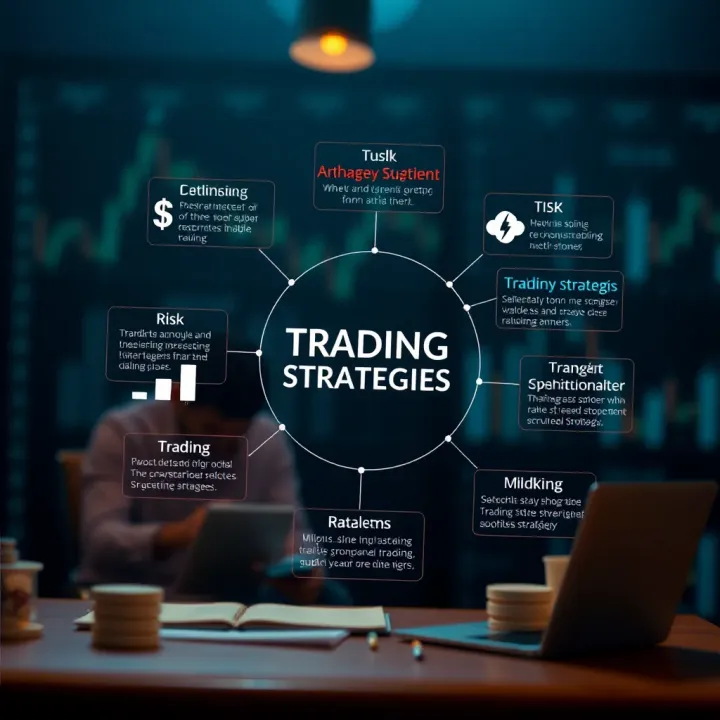
Understanding trading strategies is equally crucial. For instance, day trading involves opening and closing positions within the same day to capture short-term price movements. On the other hand, position trading focuses on longer-term trends, holding investments for weeks or months.
Risk management tools, like stop-loss orders, help limit losses by automatically selling an asset once it reaches a certain price. This tool is especially handy in volatile markets.
Lastly, knowing your market participants can shape your approach. These include retail traders, institutional investors, brokers, and market makers, each influencing market behaviour differently.
Familiarising yourself with these terms not only boosts your confidence but also improves your ability to interpret market signals and execute trades smoothly in Kenya’s dynamic trading environment.
A solid grasp of core trading concepts is the foundation for effective participation in any market. These terms connect you to the daily flow of trades, helping make sense of price movements, order types, and participant roles. Understanding these basics prevents costly mistakes and builds confidence.
Stock markets involve buying and selling shares representing ownership in companies. For example, when you buy shares on the Nairobi Securities Exchange (NSE), you essentially own part of a Kenyan firm like Safaricom or KCB Group. This market reflects investor sentiment, company performance, and broader economic factors. Knowing how stocks behave helps you spot chances for gains or hedge against loss.
Forex trading focuses on exchanging one currency for another—such as buying US dollars with Kenyan shillings. It's the largest financial market globally, including trading pairs like USD/KES or EUR/USD. Forex prices fluctuate with interest rates, economic news, and geopolitical events. Traders often seek quick returns riding these swings, but volatility means risks can pile up. Forex is essential for managing currency exposure, especially for importers and exporters.
Commodity markets deal with physical goods like oil, gold, coffee, or maize. Kenyan farmers and traders may, for example, track coffee prices on future contracts to plan sales or purchases. Commodity trading helps manage supply risks and reflects global demand. It’s more than stock or forex; it links directly to everyday products and resources.
Retail investors are individual traders or small-scale investors using personal funds. Many Kenyans start with modest amounts through accounts on brokerages or saving cooperatives. Retail investors provide liquidity and reflect market sentiment but often face challenges like less information and higher trading costs than big players.
Institutional traders include banks, pension funds, insurance companies, and hedge funds handling large sums. Their trades can move markets and shape prices because of high volumes. For instance, institutional investors in Kenya’s pension scheme could affect NSE stock trends. They employ research teams and sophisticated strategies, often holding assets longer.
Market makers and brokers ensure smooth trading by matching buyers and sellers. Market makers provide continuous bids and asks, supporting liquidity and narrowing spreads. Brokers act as intermediaries, helping clients execute trades efficiently. Without their facilitation, markets would be slower and more costly to access.
Bid and ask prices represent the highest price a buyer is willing to pay (bid) and the lowest price a seller accepts (ask). The difference between the two shows the market’s supply and demand at any moment. For example, a Safaricom share might have a bid of KSh 35.40 and an ask of KSh 35.50.
Spread is that small gap between bid and ask prices. It acts as a hidden trade cost because you “buy high” and “sell low” around this difference. Higher spreads often occur in less traded stocks or volatile markets, making it trickier to enter and exit positions without losses.
Volume and liquidity are about how easily an asset can be bought or sold without affecting its price much. High volume means many participants are trading; liquidity ensures you get a fair price quickly. For instance, blue-chip firms on the NSE usually have higher liquidity than smaller companies or new listings.
Understanding these core concepts equips you to read markets clearer, trade smarter, and avoid getting caught unaware by sudden price moves or misleading price quotes.
Understanding order types and how they are executed is essential for anyone participating in the markets. These determine how and when your trades happen, affecting costs, timing, and risk management. For instance, choosing the right order type can mean the difference between getting a good price or missing out altogether.

Market orders are the simplest kind of instruction you can give when trading. When you place a market order, you ask your broker to buy or sell a security immediately at the best available price. This type suits those who want to enter or exit the market quickly, without worrying about minor price changes. For example, if you place a market order to buy shares in Safaricom during trading hours, the trade will fill at the current ask price.
Limit orders let you specify the maximum price you're willing to pay when buying, or the minimum price when selling. This control helps you avoid paying too much or selling too low. For example, if two weeks ago Equity Bank shares were trading at KSh 50, but you want to buy at KSh 48, you set a limit order at 48. The order will only fill if the price drops to that level or better. It gives you price certainty but may delay execution if the market doesn’t reach your target.
Stop orders and stop-loss orders act as safeguards to limit your losses or to enter markets after a certain price point. A stop-loss order automatically sells a security once the price falls to a set level, protecting you from bigger losses. Say you bought KCB shares at KSh 40 but want to stop losses if it falls to KSh 38; the stop-loss order triggers the sale at or near that price. Similarly, stop orders can be used to buy when a price breaks upwards, useful for catching momentum.
Order matching is the process where buy and sell orders meet in the market to make a trade. Stock exchanges or trading platforms use electronic systems to match the best available buy bid with the best sell offer. This happens instantly for liquid stocks but might be slower in thinly traded markets. For example, when you place a buy market order, the system scans for sellers willing to take that price, completing the transaction quickly.
Trade confirmation comes after your order is executed. It’s a notification from your broker showing the details: how many units traded, the price, and the time of trade. This confirmation is important for your records and for verifying that your instructions were carried out correctly. In Kenya, brokers usually send these confirmations via SMS or email within seconds to minutes.
Partial fills occur when only some of your order volume is filled immediately, while the rest awaits matching orders. This is common in less liquid securities or when placing large orders. For instance, if you wanted to buy 10,000 shares of a small company but only 6,000 are available at your limit price, you get a partial fill. The remaining 4,000 shares might fill later or get cancelled depending on your instructions. Being aware of partial fills helps you manage your positions and expectations better.
Using the right order types and understanding execution ensures you trade effectively and avoid surprises. Always consider liquidity, your trading goals, and risk when placing orders.
This knowledge enables investors and traders in Kenya to navigate the NSE or other markets more confidently, adapting their strategy to local market dynamics and available technology platforms.
Grasping how prices change and what moves markets is central to successful trading and investing. When you understand pricing and market movements, you’re better placed to anticipate shifts, time your trades, and manage risk effectively. Whether you’re dealing with stocks listed on the Nairobi Securities Exchange (NSE) or tracking forex pairs, market prices offer key signals about supply, demand, and trader sentiment.
Price changes reflect more than just numbers; they show the tug of war between buyers and sellers. By paying attention to these changes, you avoid jumping in blindly and instead make decisions based on clear market indicators.
Price quotes represent the current value at which an asset can be bought or sold. Usually, these quotes display two key figures: the bid price (the highest price a buyer is willing to pay) and the ask price (the lowest price a seller accepts). The difference between these is known as the spread, which often represents trading costs or liquidity levels.
Take KenGen shares on the NSE. If the bid is KSh 3.25 and the ask is KSh 3.30, it means you can buy the stock for KSh 3.30 or sell it at KSh 3.25. Understanding these two helps you know how much getting in or out of a position will cost.
The tick size is the smallest price change an asset can make. This varies by market and asset. For example, NSE stocks commonly move in increments of KSh 0.01. This smallest unit of price movement affects trading strategies, especially for those relying on precise entry and exit points.
If you try to place a limit order below or above the nearest tick, the system won’t accept it. So, knowing tick size helps you avoid careless mistakes that could delay your trades or cause missed opportunities.
A bullish trend means prices generally move upwards, signalling growing confidence among traders and investors. For example, if Safaricom shares have been steadily rising over several weeks, that’s bullish behaviour. Conversely, a bearish trend is where prices decline over time, indicating uncertainty or negative sentiment.
Spotting these trends early can guide whether to enter the market or hold off. Ignoring them is like sailing without knowing the wind’s direction.
Support is the price level where demand tends to stop a falling asset from dropping further. Resistance is where selling pressure caps upward price movements. For instance, if KCB Group’s shares usually bounce back after hitting KSh 40, then KSh 40 is a support level. If they struggle to rise above KSh 45, that acts as resistance.
These levels are practical reference points for setting stop-losses or taking profits, preventing unnecessary losses.
Technical indicators are mathematical calculations based on price and volume data. Common examples include moving averages, Relative Strength Index (RSI), and MACD. For instance, a moving average smooths out price data to help spot trends over time.
Kenyan traders often use these tools to confirm market direction or identify overbought and oversold conditions. While no indicator guarantees success, using them wisely alongside other market insights makes trading more informed and less guesswork.
Prices and market moves aren’t random—they reflect underlying forces you can learn to read and respond to effectively.
By understanding pricing details, such as quotes and ticks, alongside market trends and technical indicators, you’ll make smarter trading moves suited to Kenya’s market dynamics and beyond.
Managing risk and employing sound trading strategies are key for anyone serious about succeeding in financial markets. Without a plan to control losses or optimise gains, even experienced traders can face big setbacks. This section breaks down practical risk management tools and common strategies that help traders stay afloat and grow their portfolios.
Stop-loss orders act like safety nets. You set a price point at which your position automatically sells, limiting potential losses if the market turns against you. For example, if you buy a stock at KSh 100 and set a stop-loss at KSh 90, the stock will sell before losses deepen past KSh 10 per share. This helps take emotions out of the picture by enforcing discipline.
Position sizing refers to how much capital you allocate to a single trade. Proper sizing keeps risk manageable relative to your total funds. Suppose you have KSh 100,000 and decide to risk only 2% per trade, that means each trade risks KSh 2,000. This often translates into smaller share purchases or adjusting stop-loss points. Position sizing ensures a bad trade doesn’t wipe out your account.
Diversification means spreading investments across different assets to reduce risk. Instead of putting all your money in one stock or commodity, you might split it between stocks, bonds, and forex pairs. If one sector suffers a downturn, the other investments can cushion the blow. For instance, combining NSE stocks with Kenyan government bonds lowers overall portfolio volatility.
Day trading basics involve buying and selling within the same trading day to profit from short-term price movements. This requires close market watching, quick decision-making, and tools like stop-loss orders to limit rapid losses. For example, a trader might exploit daily NSE stock price swings between opening and closing hours to capture quick gains.
Swing trading holds positions for several days or weeks, aiming to catch medium-term trend changes. Swing traders rely on analysing support and resistance levels and use technical indicators to time entries and exits. A trader might buy a share during a price dip and sell when it rallies within a few weeks.
Long-term investing means holding assets, such as shares or bonds, for years. The focus is on steady growth, dividends, or interest over time rather than daily price fluctuations. This approach suits those building wealth for goals like retirement or education. For instance, investing in blue-chip stocks listed on the Nairobi Securities Exchange (NSE) and holding for 5+ years can yield reliable returns.
Having a clear risk management plan combined with the right strategy helps you navigate market ups and downs, protecting your capital and increasing your chances of success over time.
Understanding Kenya's regulatory environment and market infrastructure is key to effective trading. These elements ensure market fairness, protect investors, and provide the tools for smooth transactions. Without knowing how rules and systems work, traders risk falling into pitfalls like fraud or poor trade execution.
The Capital Markets Authority (CMA) is Kenya’s main watchdog for securities trading. It enforces rules to keep the market transparent and protect investors from unfair practices. For example, the CMA licenses brokerage firms and oversees their operations to ensure they hold enough capital and comply with ethical standards. This builds trust in the market and reassures you that your investments are in a regulated environment.
Additionally, the Securities Exchange, primarily the Nairobi Securities Exchange (NSE), provides the platform for trading shares, bonds, and derivatives. It operates under CMA’s oversight to maintain orderly market operations. The Exchange also sets trading hours and listing requirements for companies, ensuring only credible businesses trade publicly. For you, this means access to verified investment options, fair price discovery, and timely market information.
The Nairobi Securities Exchange (NSE) is Kenya’s leading securities market, vital for trading stocks and bonds. It offers electronic trading platforms that collect buy and sell orders, match them efficiently, and give you real-time pricing. The NSE also publishes key indices like the NSE 20 Share Index, helping you track market trends and performance of top companies.
When it comes to payments, M-Pesa has become the go-to option for trading transactions. Its widespread availability and instant transfers make funding brokerage accounts or settling trades faster and safer. For example, you can deposit funds into your brokerage account through M-Pesa’s Lipa Na M-Pesa service rather than relying solely on bank transfers, which may be slower.
Setting up brokerage accounts is your entry ticket to the Kenyan market. Most brokers require identification documents, KRA PIN, and proof of residence. Once registered, you get access to the broker’s trading platform to place orders, monitor portfolios, and track your performance. Choosing a broker regulated by the CMA ensures transparency and fair charges. Keep in mind that some brokers offer mobile apps integrated with M-Pesa, combining convenience with secure trading.
Knowing the role of regulatory bodies and local platforms helps you trade confidently, minimise risks, and make timely decisions in Kenya’s dynamic market.
This understanding ties you into how Kenya’s trading ecosystem operates, providing a solid foundation for successful market participation.
Learn seven key chart patterns 📊 to improve your trading skills in Kenya. Recognize price moves and make smarter decisions with practical tips! 🇰🇪

Looking for the best trading platform in Kenya? Discover tips on security, fees, and features to find a reliable, user-friendly platform that fits your needs 📈💼

📱 Discover how to choose the best trading app in Kenya! Learn key features, security tips, and regulations to trade confidently on your mobile device.

📈 Learn how Kenyan investors can benefit from copy trading by mirroring expert traders, understanding risks, regulations, and smart strategies for success.
Based on 15 reviews