

Understanding Binary Derivatives: Key Concepts & Uses
Explore binary derivatives 🔢, their math basics, types, calculation techniques, and practical uses in finance and maths. Clear insights for Kenyan readers.
Edited By
Isabella Green
Derivatives are financial contracts whose value depends on the price movement of an underlying asset. In Kenya, understanding derivatives is becoming more relevant as traders, brokers, and investors look for ways to manage risk and improve returns. These instruments span a range of markets, from equities traded on the Nairobi Securities Exchange (NSE) to commodities and currencies.
At their core, derivatives allow parties to exchange risk without owning the underlying asset directly. For example, a coffee farmer in Kericho might enter a futures contract to sell their harvest at a fixed price ahead of time. This protects against price drops at harvest, even if the actual coffee is delivered later. Similarly, a corporate importer might use currency options to hedge against shilling volatility.

Derivatives come in several forms, each with distinct characteristics and uses:
Futures: Agreements to buy or sell an asset at a predetermined price and date.
Options: Rights, but not obligations, to buy or sell an asset within a specified period.
Swaps: Contracts exchanging cash flows, often used in interest rate or currency management.
Calculation of derivative prices relies on factors like the current price of the underlying, time to expiry, volatility, and interest rates. For instance, options pricing often uses models like Black-Scholes, though many practitioners prefer simpler, real-world adjustments.
Remember: Derivatives amplify both potential gains and losses. They require sound knowledge and risk management, as missteps can lead to significant losses.
In Kenya, regulatory bodies oversee derivative trading to safeguard participants and maintain market integrity. The Capital Markets Authority (CMA) sets rules ensuring transparency and limits excessive speculation.
Practical uses of derivatives include:
Hedging: Protecting investments or business costs against adverse price changes.
Speculation: Attempting to profit from price movements without owning the underlying asset.
Arbitrage: Spotting and exploiting price differences across markets.
Understanding these concepts equips Kenyan market players to make informed decisions in an evolving financial environment. It also supports prudent participation in global and domestic markets, balancing opportunity with caution.
Derivatives play a significant role in both financial markets and the wider economy. At their core, derivatives are financial contracts whose value depends on an underlying asset—be it a commodity, currency, interest rate, or stock. These instruments help investors, traders, and businesses manage risks and seize opportunities without owning the actual asset.
A derivative is a contract that derives its value from an underlying asset or benchmark. Common underlying assets include agricultural products like maize or tea, currencies such as the Kenyan shilling, and stock indexes like the Nairobi Securities Exchange (NSE) 20 share index. The contract sets terms on price, quantity, and expiry date, allowing parties to agree on future transactions or rights without immediate exchange of the asset.
Forwards and futures are agreements to buy or sell an asset at a predetermined price on a future date. The main difference is that forwards are private, customised contracts, while futures are traded on regulated exchanges with standardised terms. In Kenya, a farmer might use a forward contract to lock in the price of maize months before harvest, protecting against sudden price drops. Meanwhile, a company importing goods might use futures to manage currency fluctuations between the Kenyan shilling and the US dollar.
Options give the holder the right, but not the obligation, to buy or sell an asset at a fixed price before a specific date. This flexibility makes options valuable for hedging and speculation. For example, an investor concerned about a potential fall in Safaricom shares could buy a put option as insurance, limiting losses if the price drops but retaining the ability to benefit if prices rise.
Swaps involve exchanging cash flows or financial instruments between parties, often to adjust exposure to interest rates or currencies. For instance, a Kenyan company with a loan tied to variable interest rates may enter an interest rate swap to fix its repayments, providing budgeting certainty. Currency swaps can also help businesses operating across East Africa hedge against exchange rate risks.
Derivatives contribute to market efficiency by enabling better risk sharing. They help businesses and investors plan with greater certainty, which supports investment and trade. However, if misused or poorly understood, derivatives can introduce systemic risks, as seen in global financial crises. In Kenya, regulatory bodies like the Capital Markets Authority (CMA) oversee derivative markets to promote transparency and protect participants.
Derivatives are practical tools, but understanding their mechanics and risks is essential to use them effectively in Kenya’s dynamic economic environment.

Derivatives play a vital role in finance by helping businesses and investors manage uncertainty and make informed decisions. They provide tools to control risk linked to price changes of commodities, currencies, or interest rates. This section explains how derivatives function in finance, focusing on risk management and real-world use cases specifically relevant to Kenya’s market.
Hedging involves using derivatives to reduce potential losses from price fluctuations. For example, a Kenyan tea exporter worried about falling prices can use futures contracts to lock in a selling price ahead of harvest. This way, even if the market price drops, the exporter’s revenue remains stable. Hedging does not aim for profit but rather secures business continuity by limiting exposure to risk.
Many financial institutions and companies rely on derivatives to manage risks embedded in their operations. In Kenya, banks may use interest rate swaps to protect against interest rate rises on loans they hold. These contracts help stabilise repayment costs, making budgeting more predictable.
Unlike hedgers, speculators use derivatives to bet on price movements, aiming for profit from market changes. While this can bring gains, it also exposes investors to significant losses if markets move against them. This risk is especially notable in volatile markets such as forex or commodities.
Speculation requires careful analysis and often experience because leverage in derivatives amplifies both potential gains and losses. For Kenyan traders, it’s important to understand these risks fully and avoid overexposure, as losses may exceed initial investments.
Kenya’s economy depends heavily on agriculture, and commodity contracts offer farmers and buyers tools to stabilise prices. For instance, maize or coffee producers can enter futures contracts with buyers to fix prices before the harvest season. This not only secures predictable income but also supports planning for both parties.
These contracts help Kenyan farmers avoid sudden price crashes due to oversupply or seasonal changes. Moreover, they can access financing more easily when they have secured prices, which boosts investment in better farming inputs or equipment.
Currency swaps allow Kenyan companies engaged in international trade or borrowing to exchange currency obligations, thus managing exchange rate risk. For example, a firm with a loan in US dollars but revenue in Kenyan shillings may use a currency swap to stabilise repayments despite exchange fluctuations.
Interest rate swaps are popular tools for businesses to convert between fixed and floating rate loans. Given fluctuating CBK policy rates, some Kenyan companies prefer swaps to adjust their borrowing costs in line with market conditions, improving financial flexibility.
Through practical applications like hedging and swaps, derivatives help Kenyan businesses reduce uncertainty, plan effectively, and compete better in both local and global markets.
By understanding these mechanisms, finance professionals and traders can make more informed decisions that suit their risk appetite and strategy, contributing to a healthier financial ecosystem in Kenya.
Calculating derivatives is central to understanding how changes occur within financial markets and broader economic activities. It provides a way to measure how one variable shifts compared to another, such as how a stock price changes over time or how interest rates fluctuate with economic conditions. For Kenyan traders, investors, and finance professionals, grasping derivative calculations helps in making sharper decisions about risks and opportunities, particularly when dealing with complex financial instruments.
At its core, the derivative represents the rate of change of a quantity. For example, if you look at the price of maize over a month, the derivative tells you how fast the price is rising or falling day by day. Practically, this matters because knowing the speed of change can guide when to buy or sell before prices move too far.
More technically, it measures how a small change in one variable causes a change in another. This principle is not just limited to prices—it also helps assess changes in interest rates, exchange rates, or even production costs, which are key for Kenyan firms planning their budgets and financial strategies.
Basic derivative functions include simple cases like the slope of a straight line or curves representing commodity prices, stock indices, or loan repayments. Understanding these functions helps analysts predict trends—for instance, the steepness of a curve shows how erratic a price might be.
Take a simple function like y = 3x². Its derivative tells you how the value of y changes as x changes, which could model how cost changes with production levels. Such knowledge is useful in budgeting and forecasting.
Derivatives are mostly calculated using limits—a way of zooming in to see how a function behaves at an exact point. Differentiation rules simplify this process for everyday use. Rules like the power rule or product rule let you work out derivatives of complex financial formulas without starting from scratch each time.
For example, calculating how a swap contract’s value changes as interest rates adjust is easier using these rules, saving time and avoiding errors.
In business, derivatives help optimise profits and minimise costs by showing where small tweaks in operations have the biggest impact. A Kenyan manufacturing firm can use derivatives to decide the best input levels for maximum yield.
Engineering uses derivatives to design systems that respond efficiently under changing conditions, such as monitoring temperatures or pressure in industrial setups common in Kenya’s growing energy sector. Essentially, derivatives connect theory to everyday practical decisions.
By mastering derivative calculations, finance professionals sharpen their toolkit to analyse trends, manage risks, and predict market behaviour more effectively — a valuable skill in Kenya's dynamic financial environment.
Traders can use derivative computations to adapt strategies as prices shift rapidly.
Investors gain insight into volatility and timing for asset purchases or sales.
Analysts rely on these calculations to build models reflecting economic realities.
Understanding both the math and applications makes derivatives less abstract and more a powerful tool in Kenyan financial markets.
Derivatives offer powerful tools for managing financial risks, yet they also carry significant risks and complexities. Understanding the challenges helps investors and traders make informed decisions and avoid costly mistakes. In Kenya's growing financial markets, being aware of these risks is vital, especially as more participants engage with derivatives like futures and swaps.
Market risk arises because derivative values depend on underlying assets, which can fluctuate widely. For example, a farmer in Kisumu who uses commodity futures to lock in maize prices might still face losses if prices change unpredictably due to weather or demand shocks. Sudden market moves can lead to margin calls, forcing traders to add funds or close positions at a loss.
Credit risk, on the other hand, involves the possibility that a counterparty fails to honour their obligations. This risk is seen in swaps or forwards where one party relies on the other to deliver money or assets later. In Kenya, currency swaps done between banks must carefully assess each party’s creditworthiness, as default can disrupt financial stability.
Both market and credit risks can multiply when derivatives are used for speculation rather than hedging, increasing the chance of significant financial harm.
The Capital Markets Authority (CMA) is the key regulator overseeing derivatives trading in Kenya. Its role includes licensing market intermediaries, monitoring compliance, and ensuring transparent trading practices. CMA’s oversight helps build investor confidence by reducing fraud and malpractice. For instance, derivatives exchanged on Nairobi Securities Exchange (NSE) must meet CMA guidelines, which protect both retail and institutional investors.
By regulating who can trade and how derivatives are reported, CMA promotes market discipline and helps prevent systemic risks that could affect the entire economy.
Market participants dealing in derivatives must adhere to strict compliance rules. These include capital adequacy norms, reporting standards, and timely disclosure of positions. Brokers and dealers are required to establish internal controls and risk management systems to monitor derivatives exposure regularly.
Compliance ensures that players manage risks prudently and maintain financial soundness. For example, a commodity trader engaging in futures contracts must keep detailed records and submit reports to CMA, allowing regulators to track unusual activity or excessive risk-taking.
Such regulations also promote fairness by ensuring all market actors operate on a level playing field, thereby supporting the orderly growth of derivatives markets in Kenya.
Explore binary derivatives 🔢, their math basics, types, calculation techniques, and practical uses in finance and maths. Clear insights for Kenyan readers.
🔍 Understand the term 'derive' in maths, language, and daily use. Learn how derivatives work in calculus, origins of words, and practical ways of extracting value.
Explore the term 'deriv.' 📚 across linguistics, math, finance, and data science. Learn how to use it clearly and avoid common confusions.
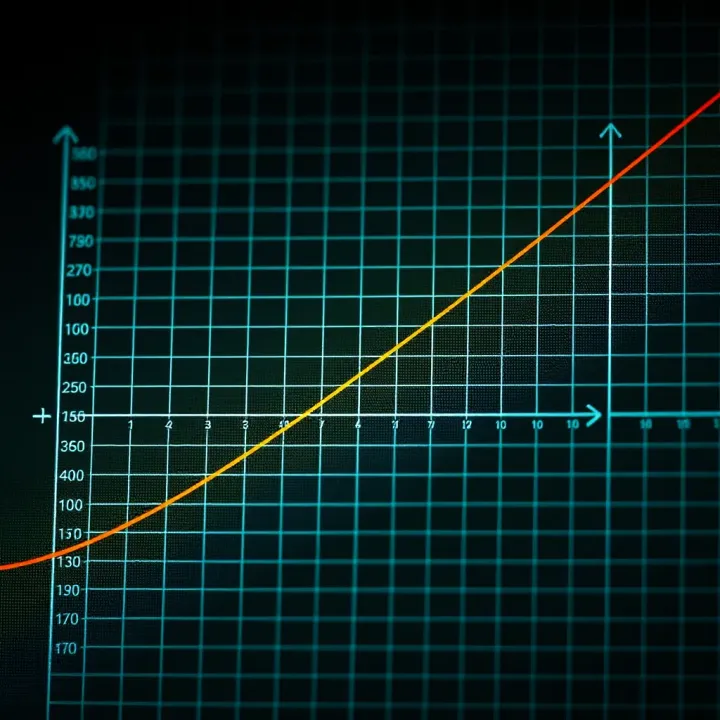
📘 Explore how to find derivatives of natural and common logarithms, with clear steps and practical examples tailored for students and pros in Kenya.
Based on 15 reviews