

Understanding 'Derive' and Its Uses
🔍 Understand the term 'derive' in maths, language, and daily use. Learn how derivatives work in calculus, origins of words, and practical ways of extracting value.
Edited By
Lily Watson
Derive login is a method employed in software systems to generate user credentials or authentication tokens based on existing data. Instead of manually creating new login details, the system derives necessary information—such as passwords or access keys—from a foundational input, often a master key, biometric data, or other secure elements.
This approach simplifies user access management and enhances security by avoiding repetitive password creation, which can be vulnerable to attacks. For instance, a finance app in Kenya might use derive login to generate session tokens from a user’s registered mobile number and PIN, allowing seamless but secure authentication through platforms like M-Pesa or mobile banking APIs.
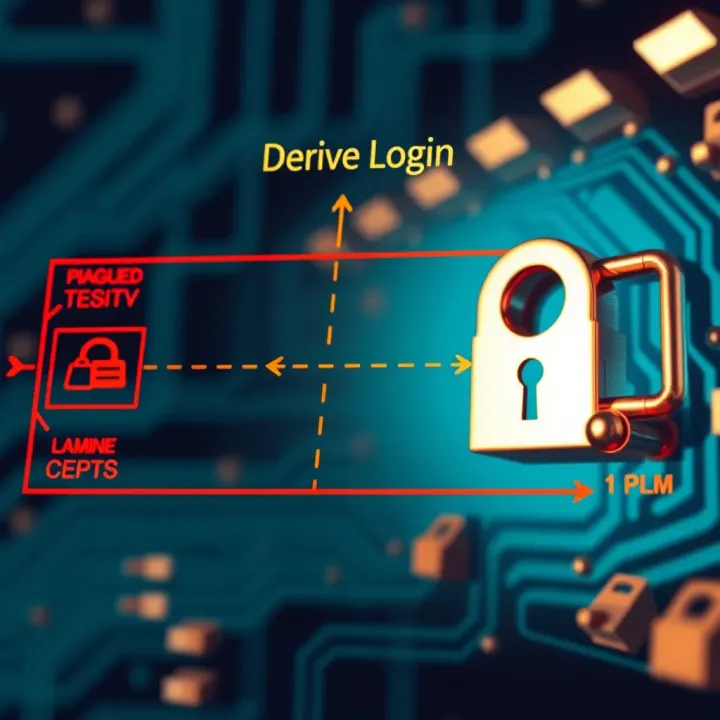
Derive login cuts down on password fatigue and reduces risk by using trusted data points, making it easier and safer for users to access financial services.
The process typically follows these steps:
Input Capture: The system receives base information such as a PIN, biometric scan, or unique device ID.
Data Derivation: Using cryptographic functions (like hashing or encryption), the system computes a login token or password.
Verification: The derived credential is checked against stored data to confirm user identity.
This method minimises direct password storage, lowering the chance of data breaches.
Derive login has practical uses in several domains:
Mobile Banking: Banks integrate derive login to authenticate customers via their mobile numbers and security codes, reducing the need for cumbersome passwords.
Trading Platforms: Stockbrokers can employ derived tokens to securely manage investor sessions, ensuring fast and reliable access.
Digital Wallets: Payment apps use derive login to facilitate secure transactions without frequent re-entry of passwords.
While derive login boosts convenience, implementers must safeguard the base data used to generate credentials. If a master key or biometric sample leaks, attackers could reproduce valid logins. Thus, applying robust encryption and multi-factor authentication alongside derive login is common practice.
For Kenyan fintech firms and developers, integrating these methods means balancing usability with Kenyan users’ demand for quick, secure access, especially given the prevalence of mobile-first interactions.
Understanding derive login equips finance professionals to assess system security confidently and select technologies that protect client information while streamlining access.
Derive login is a growing concept in digital authentication that helps software systems identify users based on existing login credentials or related session data. Instead of requiring a fresh username and password input, it allows systems to "derive" or fetch login details from an already authenticated source. This method saves time, cuts down on repetitive logins, and improves the overall user journey, especially in platforms where users frequently move across services.
At its core, derive login means a system authenticates a user by extracting or linking login credentials from another verified session or service. For example, when you log into a financial trading platform using your Safaricom M-Pesa account or Google credentials, the platform derives your login information from that trusted source. This avoids the need to create and remember separate passwords. In Kenya’s fast-growing fintech and online trading space, derive login helps investors and brokers save time and reduce the risk of weak passwords by reusing established identities securely.
The main purpose is to make access seamless without compromising security. By linking to trusted accounts or sessions, the software ensures the user is authenticated but does not require repetitive input or new credentials each time.
Unlike regular login, which asks users to manually enter their username and password every time, derive login relies on credentials already verified elsewhere. Think about logging into a Nairobi Securities Exchange (NSE) portal through your Equity Bank online banking account — the NSE system determines your identity using your existing login data without making you re-input details.
This contrasts with the standard method where a user must supply login details specific to each platform. Derive login often uses tokens, cookies, or authentication services like Single Sign-On (SSO) to achieve this smooth handoff. While regular login requires direct interaction, derive login operates quietly in the background, improving convenience for traders, brokers, and analysts who frequently switch between platforms.
Derive login lessens the hassle of juggling numerous credentials in Kenya’s bustling digital economy, making access management both efficient and safer.
In practice, this means a user can transition from an investment app to a financial news portal without repeated logins, improving workflow and saving time.
Overall, understanding derive login gives financial professionals an edge when selecting platforms that value user convenience without weakening security, vital as Kenyan digital services continue expanding.

Derive login features prominently in various practical situations where users need smoother access without repeatedly entering credentials. Understanding these scenarios helps traders, investors, and analysts appreciate how derived credentials improve security and efficiency across platforms. Kenyan digital services often rely on such mechanisms to ease user experience while preserving control and compliance.
Account linking lets a user connect their profile on one platform with another, all while maintaining a single point of identity. For instance, an investor might link their KRA iTax account to a stockbroker’s portal, permitting seamless data sharing without creating multiple separate logins. Derive login allows one system to generate a derived credential from an original login, so users don’t struggle juggling various usernames and passwords. This approach is especially useful for individuals working with multiple financial service providers, enabling smoother workflows without compromising security.
Single Sign-On (SSO) is a common corporate and online service feature allowing users to access multiple applications with one login. Derive login plays a significant role here by enabling downstream applications to check identity from a central authority. For instance, a securities firm in Nairobi might use SSO to let analysts switch between trading platforms, research tools, and client management software without constantly re-authenticating. Deriving login tokens from the main session helps reduce password fatigue and lowers risks associated with repeated password use, while simplifying the user’s journey.
Temporary or delegated access occurs when a user grants another person limited, time-bound entry to their account, common in finance where a trader may assign a broker temporary rights. Derive login supports this by generating credentials with predetermined limits, preventing full access or permanent control. For example, a portfolio manager might grant an assistant derived login credentials valid only during quarterly reporting. This protects the main account while enabling critical tasks to proceed unhindered. In the Kenyan context, where joint account management or agent involvement is common, such derived access is practical and increases operational flexibility.
Derive login scenarios reflect real needs in modern Kenyan digital finance: easing access, limiting risk, and connecting varied systems without overburdening users. These use cases are vital for firms aiming to serve clients efficiently while ensuring robust security controls.
Linking accounts avoids repeated user setups.
SSO reduces login friction across services.
Temporary access grants control with safety.
Such applications highlight derive login as a tool for smoother, safer authentication in our interconnected finance environment.
Implementing derive login effectively requires a solid grasp of technical methods that ensure smooth user experiences without compromising security. For Kenyan businesses and developers, understanding these approaches is key to building systems that are both user-friendly and resistant to common threats such as session hijacking or credential theft. The technical foundation often involves handling tokens, integrating third-party authentication, and applying coding best practices and algorithms tuned to local digital environments.
One common way to implement derive login is through tokens and session data. When a user logs in, the server issues a token—such as a JSON Web Token (JWT)—that holds user credentials or session information. Instead of asking users to enter their passwords repeatedly, the system uses these tokens to "derive" login status during subsequent requests. For instance, a Kenyan e-commerce platform might issue a short-lived token after a user logs in via M-Pesa or a standard password, allowing seamless access while browsing products.
This approach reduces server load and improves speed but requires careful handling to avoid risks. Tokens must be encrypted and stored securely, typically in HTTP-only cookies or secured local storage. Furthermore, tokens should have expiry times aligned with Kenya’s data privacy guidelines, to minimise exposure if a device gets stolen or compromised.
Derive login often links strongly with third-party authentication services, such as Google, Facebook, or local providers like Safaricom’s authentication APIs. Here, a user’s login state is derived from a verified external source. For example, a trader using a Nairobi-based stock trading app might log in using their Google account or through Safaricom’s Open Authentication layer, which verifies their identity without needing a fresh password.
This method simplifies user onboarding and reduces the need to manage multiple passwords. That said, Kenyan developers should ensure their systems correctly parse and validate tokens or credentials from these third parties. They must also handle scenarios where third-party services are unavailable or where user consent or privacy concerns arise.
Effective coding practices are crucial for smooth derive login implementations. Developers typically use algorithms that securely generate or verify tokens, manage session continuity, and enforce permission levels. For instance, hashing algorithms such as SHA-256 or bcrypt help protect passwords before any derive login processing begins.
Beyond security, clean code organisation helps maintain scalability, important for Kenyan fintech startups or large enterprises. Including error handling for invalid or expired tokens and auditing login attempts supports compliance with Kenya’s data protection laws. Additionally, algorithms may incorporate user behaviour analytics to detect suspicious login patterns, adding a layer of security.
Successful derive login implementation depends on combining robust token management, reliable third-party authentication integration, and strong coding standards. This mix ensures both user convenience and system security, vital in today’s digitally evolving Kenyan market.
By focusing on these approaches, Kenyan software developers can create authentication systems that serve users effectively while staying ahead of security challenges common in online platforms.
Deriving logins simplifies how users access multiple services while helping businesses manage access efficiently and securely. In Kenya’s fast-growing digital economy, this approach translates to smoother journeys for customers and tighter control for organisations, reducing friction and risks.
Deriving login significantly cuts down the hassle of juggling multiple passwords or accounts. For example, a trader using an investment platform might link their login with their mobile-money account, like M-Pesa, so they can switch between trading and payments without signing in repeatedly. This convenience means users spend more time focusing on their activities rather than struggling with access issues.
Besides ease, derived logins often improve speed. When a broker accesses a client’s portfolio through a partner system, the immediate recognition enabled by the derived login avoids downtime waiting for manual verification. This seamless flow reflects positively on service providers and builds user trust.
From a business standpoint, managing derived logins helps centralise user access, especially for organisations with multiple platforms or services. A finance firm, for instance, can establish single control points for employee logins, reducing the need to update user details in separate systems. This saves time and eases administrative burden.
Furthermore, derived logins offer clearer visibility over who is accessing what, making auditing and compliance easier. Businesses dealing with sensitive financial data can better enforce policies and quickly deactivate access if suspicious activity arises. This structured management protects both the company and its customers.
Giving users derived login options helps set appropriate access levels without exposing full credentials every time. Instead of sharing passwords across systems, tokens or session keys are exchanged, lowering the chance of leaks.
Consider a case where an analyst accesses proprietary market data from several partners; derived login mechanisms ensure that only approved parts of the system are open based on roles. This controlled access guards against potential insider threats or external hacks.
Controlled derivation of logins effectively balances ease of use with security, a balance critical to financial and trading environments where trust and data protection are non-negotiable.
In Kenya, this approach aligns well with regulations on data privacy and cybersecurity, helping firms avoid penalties and build customer confidence.
Overall, deriving logins offers clear benefits by enhancing the user journey, simplifying administration, and tightening security in ways that work well for Kenyan digital businesses and users alike.
When implementing derive login systems, security should be a top priority. These systems link or generate user access based on existing login data, making them vulnerable if not handled carefully. Weaknesses in one system can cascade, exposing multiple platforms to risks. This makes understanding specific vulnerabilities and adopting best practices essential, especially in Kenya where digital platforms increasingly integrate local and international services.
Derive login can introduce several security risks. One common vulnerability is token interception, where attackers capture session tokens over insecure networks, allowing unauthorised access. For example, users connecting to public Wi-Fi in Nairobi’s malls or cafés might have their tokens stolen if encryption is weak. Another issue is token replay attacks, where a captured token is reused maliciously.
Poor token management is also a concern. If tokens are not set to expire or are stored insecurely, attackers can exploit them longer. In addition, cross-site request forgery (CSRF) can trick users into unknowingly authorising actions through derived logins. Developers must watch for these and related flaws during design and testing.
Securing derive login requires adopting well-established security controls tuned for Kenya’s internet use. For starters, all tokens should be transmitted over HTTPS to encrypt data end-to-end, protecting users on matatu stages or busy internet cafés. Tokens and session information must expire shortly and require frequent renewal. This limits damage if stolen.
Multi-factor authentication (MFA) adds another layer of defence. For instance, banks like Equity Kenya use one-time PINs (OTPs) through SMS or app generators, which can be integrated into derive login workflows. Monitoring for suspicious activity, such as multiple login attempts from different locations within a short time, can also prevent fraud.
Developers should implement strict session handling, ensuring old sessions are invalidated immediately after logout or timeout. Role-based access control (RBAC) restricts what derived logins can do, reducing risk if someone gains unintended access.
Kenya’s Data Protection Act (DPA) governs the handling of personal data, including data processed during authentication. Organisations must ensure derive login systems comply by limiting data collection to what is necessary and protecting user data during transmission and storage.
Consent is key. Users should understand how their login data is derived and used, with clear privacy notices presented during account creation or linking. Failure to comply risks hefty fines and reputational loss.
Data localisation rules under the DPA suggest sensitive information may need to be stored within Kenya, which affects cloud service choices when implementing derive login.
Implementing derive login securely is not just a technical step but a trust-building exercise. It safeguards users and protects your business reputation in a digitally evolving Kenyan market.
In summary, mitigations against token theft, session misuse, and adherence to Kenya’s data laws form the backbone of safe derive login implementations. These measures ensure smoother, safer user experiences while meeting local regulatory demands.
🔍 Understand the term 'derive' in maths, language, and daily use. Learn how derivatives work in calculus, origins of words, and practical ways of extracting value.

Explore the term 'deriv.' 📚 across linguistics, math, finance, and data science. Learn how to use it clearly and avoid common confusions.

Explore binary tools 🛠️, how they work and their real-world uses in software development and cybersecurity, focusing on Kenya’s tech landscape.

Explore how Derivbot automates derivative trading with key features, safety tips, and local insights to help Kenyan traders navigate risks and comply with regulations 📈🤖
Based on 15 reviews