
How to Use the Deriv.com App: A Simple Guide for Kenyan Traders
📱 Discover how to navigate the Deriv.com app with ease: setup, trading tips, security, withdrawals, and solid support—perfect for Kenyan traders!
Edited By
Henry Davies
Tradeview.com is a popular tool among Kenyan traders looking to get a clear picture of market trends. It offers interactive charts that let you watch price movements in real time, helping you make better trading decisions. These charts pull data from global exchanges and present it in a way that’s easy to understand, whether you’re trading forex, stocks, commodities, or indices.
The platform’s charting tools come with several features tailored for practical use. You can select different time frames — from one-minute to monthly views — to suit your strategy, whether you’re a short-term scalper or a long-term investor. Tradeview.com also provides drawing tools, technical indicators like Moving Averages or RSI (Relative Strength Index), and overlays to analyse price behaviour effectively.
For Kenyan traders, one big plus is the accessibility of these charts without heavy downloads or complex installations. You can open them directly from a mobile browser or desktop, allowing you to keep an eye on the market while on the move or from your laptop. This flexibility is especially useful in Nairobi or other towns where desktop access isn’t always convenient, but mobile internet is available.
Knowing how to read and customise Tradeview.com charts can give you a practical edge. You’ll spot trends early, identify support and resistance levels, and measure market momentum more precisely.
Some key chart types you’ll work with include:
Candlestick charts: Popular for showing open, high, low, and close prices in a clear visual format.
Line charts: Simpler, connecting closing prices to show general price direction.
Bar charts: Similar to candlesticks but with a different style, showing price range and close points.
Because these charts update frequently and provide flexible options, they suit many trading styles and markets. Plus, they support common technical analysis techniques that serious Kenyan traders use daily.
In brief, knowing your way around Tradeview.com charts means you can make informed decisions faster, avoid emotional trades, and adapt swiftly when the market shifts. This makes your trading smarter and less of a gamble.
Tradeview.com is a widely used online trading platform that offers traders access to a variety of financial markets including forex, commodities, and indices. Its charting platform stands out for combining powerful tools with an easy-to-use interface, making it practical for both seasoned traders and those starting out. Understanding Tradeview.com’s charting platform is essential for anyone who wants to make informed trading decisions based on solid market analysis.
Tradeview.com provides direct market access with competitive spreads and fast execution, which appeals to Kenyan traders looking for reliable platforms. It supports multiple account types, including ECN accounts, which offer lower transaction costs and better pricing. Users can trade on MT4, MT5, and cTrader, but its native charting tools provide an alternative that integrates seamlessly without needing separate software.
This platform brings together real-time price data, various order types, and comprehensive charting all in one place. For example, a trader in Nairobi analysing the USD/KES pair can quickly switch between timeframes and apply technical studies to spot potential entry and exit points without leaving the platform.
Getting started with the charting features on Tradeview.com is straightforward. Once logged in, users can access charting via the main dashboard by selecting the desired market. The charts load quickly and offer options to customise views, including choosing candlesticks, line, or bar charts.
Key components include:
Timeframe selector: Easily toggle between 1-minute, 5-minute, hourly, daily, weekly, or customised intervals.
Technical indicators: Add popular tools such as Moving Averages and RSI with a few clicks.
Drawing tools: Plot trend lines or Fibonacci retracements directly on the charts to identify support and resistance.
The layout keeps essential controls visible while providing a clean space for analysis. Kenyan traders will find it handy that the platform supports saving chart layouts and preferences, so frequent users can resume their work quickly without reconfiguring settings.
Efficient navigation means traders spend more time analysing markets and less time fumbling with tools.
In all, Tradeview.com’s charting platform is designed for practical use. It provides the right balance of features and simplicity, helping you make clearer decisions whether you trade the NSE, forex pairs, or commodities like tea and coffee futures. Understanding its core functions is the first step to better trading outcomes.
Tradeview.com offers several chart types, each suited for different analysis needs. Understanding these common chart forms helps traders spot trends, potential entry and exit points, and overall market sentiment more clearly. Kenyan traders dealing with forex, stocks, or commodities can benefit from choosing the right chart type depending on their strategy and market conditions.
Line and area charts strip down price data to its basics, showing a simple line or a filled area connecting closing prices over time. These charts are especially useful when you want a quick sense of the market direction without getting bogged down in too much detail. For example, a Kenyan investor tracking the NSE 20 share index may use a line chart to see how the market performed across a financial quarter. The clear visual helps identify steady upward trends or sharp dips in prices.
What makes them practical is their simplicity — they reduce noise and let you focus on the bigger picture. Area charts add volume or intensity by filling space under the line, making it easier to see momentum changes at a glance. However, traders should note these charts don’t capture intraday price swings, so they might miss short-term volatility.
Candlestick charts are the favourite among many traders because they provide a richer picture of price action within each period. Each candle shows the opening, closing, high, and low prices, allowing you to grasp market psychology — whether buyers or sellers dominated.
For instance, a candlestick with a long upper wick on a Kenyan blue-chip stock might suggest price rejection at higher levels, signalling a potential reversal. Recognising patterns like doji, hammer, or engulfing candles can improve timing decisions for investments or trades. These charts suit both short-term traders chasing momentum and longer-term investors looking for trend shifts.
Still, candlesticks may seem complex at first, but once you get the hang of them, they reveal hidden clues about market strength that other charts do not.
Bar charts resemble candlesticks but use vertical bars with horizontal ticks to mark opening and closing prices. While less visually intuitive than candlesticks, they offer similar insights into price ranges and fluctuations. Some traders in Kenyan forex markets prefer bar charts for their clarity when viewing fast-moving currency pairs like USD/KES.
Besides these, Tradeview.com may provide additional formats like Heikin Ashi or Renko charts, which smooth out price movements to highlight trends more clearly. These alternative formats can be useful to filter out market noise, especially during volatile periods common in commodity markets like tea and coffee.
Choosing the right chart type isn’t about which is best overall, but what suits your trading style, time frame, and the asset you’re analysing. Trial and error combined with studying Kenyan market quirks will help you make the most from Tradeview.com’s charting tools.
By mastering these basic chart types, traders can better interpret market data, set realistic targets, and manage risks effectively in Kenya’s diverse trading environment.
Technical indicators and drawing tools are vital for making sense of the raw price data shown on Tradeview.com charts. These features help traders identify market trends, signals for buying or selling, and key price levels to watch. Kenyan traders benefit greatly from these tools because they turn complex market movements into understandable patterns and actionable insights, especially when dealing with volatile markets or local economic shifts.
Moving averages smooth out short-term price fluctuations, offering a clearer view of a market’s general direction. On Tradeview.com, traders can choose between simple moving averages (SMA) or exponential moving averages (EMA). For instance, a trader in the NSE might track a 50-day moving average to understand whether a stock’s price is generally rising or falling over the medium term. When the price crosses above the moving average, it often signals a potential uptrend, and vice versa.
RSI measures the speed and change of price movements, indicating if a security is overbought or oversold. This oscillator ranges typically from 0 to 100. Trades above 70 suggest the asset may be overbought and might soon see a price correction, while values below 30 can point to oversold conditions, implying a possible bounce back. Kenyan forex traders, for example, use RSI to spot entry and exit points in currency pairs, balancing risks amid shifting economic news from Kenya and abroad.
Bollinger Bands consist of a moving average with upper and lower bands representing standard deviations. These bands expand and contract based on market volatility. When the bands narrow, it often forecasts a period of higher volatility ahead, signalling a potential breakout. Traders dealing with commodities like coffee or tea futures use Bollinger Bands on Tradeview.com to anticipate price swings, helping them time their buying or selling more effectively.
Trend lines are simple tools that connect consecutive highs or lows on the chart, forming an angle that reflects the market’s momentum. Kenyan traders often draw trend lines to spot whether prices are climbing steadily or showing signs of reversal. For example, a rising trend line on a stock like Safaricom suggests persistent buying interest, whereas a break below this line might warn of a selling tide.
Fibonacci retracements highlight possible support or resistance levels based on mathematical ratios derived from previous price swings. Kenyan investors can apply these levels on Tradeview.com to anticipate where prices might find a pause or rebound after a significant move. For instance, after a sharp rally in a bank’s share price, the 38.2% or 61.8% retracement levels may mark zones where buyers return, helping traders plan their positions.
Horizontal lines mark crucial price points where the market historically tends to pause or reverse due to concentrated buy or sell orders. These levels act like market memory, and on Tradeview.com, Kenyan traders map them to understand potential barriers or floors for price movements. In the NSE, if a stock repeatedly struggles around KSh 150, that price becomes a resistance level, guiding traders to be cautious around that point.
Using these indicators and drawing tools together improves your ability to read market signals clearly, reducing guesswork and boosting the chance of making smart trades in the fast-moving Kenyan market.
By mastering these tools on Tradeview.com, traders gain a practical edge, whether dealing with stocks, forex, or commodities traded locally or internationally.
Trading in Kenyan markets presents unique challenges and opportunities that call for practical chart-reading strategies. Tradeview.com charts provide rich data, but making sense of them requires adapting to local factors like market hours, liquidity, and currency fluctuations. This section highlights key tips to help Kenyan traders get the most out of Tradeview.com’s features.
Kenyan markets often experience volatility around regional events such as Central Bank of Kenya (CBK) monetary policy announcements or harvest seasons that affect agricultural stocks. When analysing charts on Tradeview.com, consider these local cycles carefully. For example, a spike in volume during maize harvest reports may affect commodity-related shares listed on the Nairobi Securities Exchange (NSE). Adjust your chart timeframes accordingly — intraday charts help capture short bursts during market openings, while daily or weekly views better reflect broader trends influenced by county-level policies.
Also, Kenyan market liquidity tends to be lower than in larger markets, so price movements can be sharp and less predictable. Use Tradeview.com’s technical indicators with caution; combine moving averages with volume analysis to avoid false signals. For instance, signal crossovers that hold weight in liquid markets might generate more noise locally. Developing a feel for Kenyan-specific market rhythms can help you filter out this noise and focus on meaningful chart patterns.
Relying on charts alone can be limiting. For Kenyan traders, it’s important to combine Tradeview.com’s technical insights with up-to-date market news and macroeconomic data. For example, changes in the Kenya shilling exchange rate against the US dollar often impact firms with foreign currency exposure, creating price swings visible on charts. Similarly, political developments or infrastructure projects, such as new road networks or energy pipelines, can affect sectoral performance.
Integrate information from local news sources and regulatory updates with your chart observations. When Tradeview.com shows a downward trend in banking stocks, check if the Central Bank has changed reserve requirements or if new lending regulations took effect. This combined approach supports informed decision-making rather than relying on chart patterns in isolation.
Combining chart analysis with local economic realities and news makes your trades smarter and more grounded.
In summary, Tradeview.com charts are powerful tools but require a Kenya-focused lens to be truly effective. Keep local market cycles, liquidity nuances, and economic factors in mind as you analyse pricing data. This way, you position yourself to interpret charts not just as numbers but as reflections of real-world Kenyan market dynamics.
Using Tradeview.com charts effectively requires more than just knowing how to read graphs. Traders often face specific hurdles like information overload and common interpretation errors that can cost time and money if not managed well. Understanding these challenges helps in making smarter, faster decisions in Kenya's dynamic markets.
Tradeview.com's charts offer a wealth of data points—multiple indicators, time frames, and drawing tools—to enhance market readings. Yet, too much information on one screen can confuse even experienced traders. This overload often leads to analysis paralysis where decision-making slows down or mistakes increase.
One practical approach is to simplify the view. Customise your dashboard by choosing a few reliable indicators—such as moving averages and the Relative Strength Index (RSI)—instead of loading all available tools. For example, when trading stocks on the Nairobi Securities Exchange (NSE), focusing on price action with one or two key indicators helps identify entry and exit points without distraction.
Setting clear objectives for each trading session also controls data complexity. If you plan to trade short-term forex movements, stick to shorter time frames and limit indicators accordingly. Clearing clutter not only speeds decisions but improves accuracy.
Misreading charts is a frequent problem, especially for traders new to Tradeview.com or those adapting to Kenyan market conditions. A typical mistake is over-relying on a single indicator to make trading calls. For instance, trusting only the RSI to dictate buying or selling without confirming with price trends or support levels can trigger false signals during volatile periods.
Another error is ignoring context. Charts must be analysed alongside Kenyan-specific news, economic reports, or policy changes which directly affect market movement. For example, when Kenya's Central Bank adjusts interest rates, currency and stock charts can show sudden shifts that technical indicators might lag behind.
It also helps to avoid confirmation bias—seeing patterns that fit expectations rather than what the chart actually shows. Regularly reviewing past trades and comparing them with chart predictions can build disciplined interpretation skills.
Tip: Combine multiple sources of information, keep your chart layout simple, and always cross-check technical signals with current local market news.
By recognising these common challenges and applying practical measures, Kenyan traders can navigate Tradeview.com charts more confidently, improving their trading outcomes in local and regional markets.
📱 Discover how to navigate the Deriv.com app with ease: setup, trading tips, security, withdrawals, and solid support—perfect for Kenyan traders!
Discover top trading bots for Kenyan traders 🤖 Explore features, benefits, and tips to enhance your trading strategy and manage risks effectively.

🔑 Step-by-step guide for Kenyan traders on Deriv.com login, account setup, security tips, common issues, and smart platform use. Trade confidently! 📈
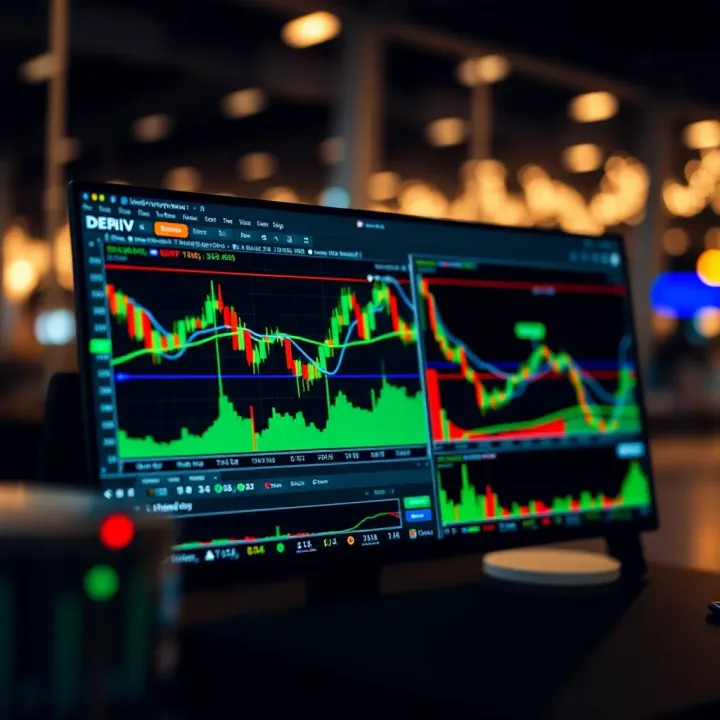
Explore how Deriv and TradingView charts work together 📈 for smarter trading. Learn tips and tricks to improve your market analysis for effective decisions.
Based on 8 reviews