
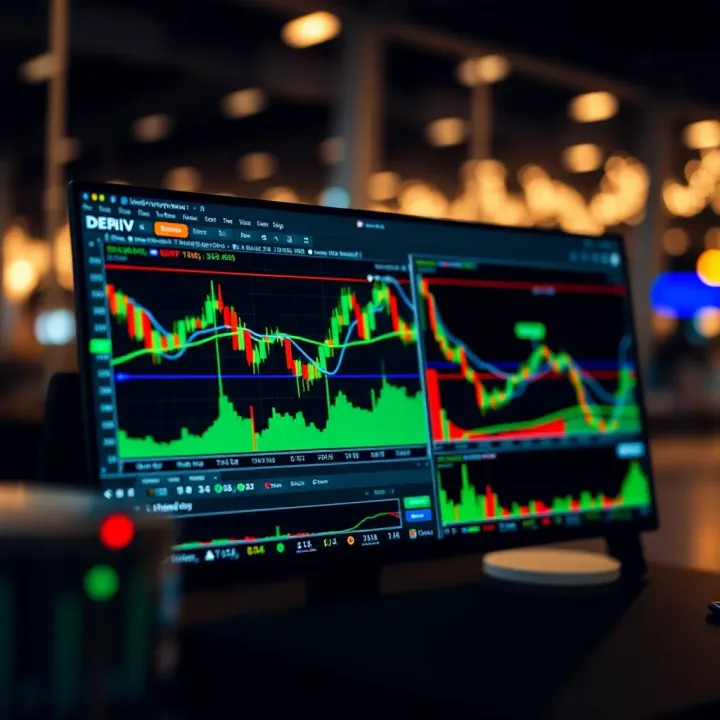
How to Use TradingView on Deriv for Market Analysis
Explore how Deriv and TradingView charts work together 📈 for smarter trading. Learn tips and tricks to improve your market analysis for effective decisions.
Edited By
Isabella Clarke
Using TradingView alongside Deriv offers Kenyan traders an edge in making smarter trading decisions. TradingView provides advanced charting tools and technical indicators that many traders find indispensable for market analysis. Deriv, on the other hand, is a popular trading platform tailored for options, forex, and CFDs, widely used in Kenya for its ease of access and reliable execution.
Integrating these two platforms allows you to analyse market trends and price movements on TradingView’s robust charts while executing trades quickly on Deriv. This combo helps avoid switching between tools and reduces delays that could cost you money.
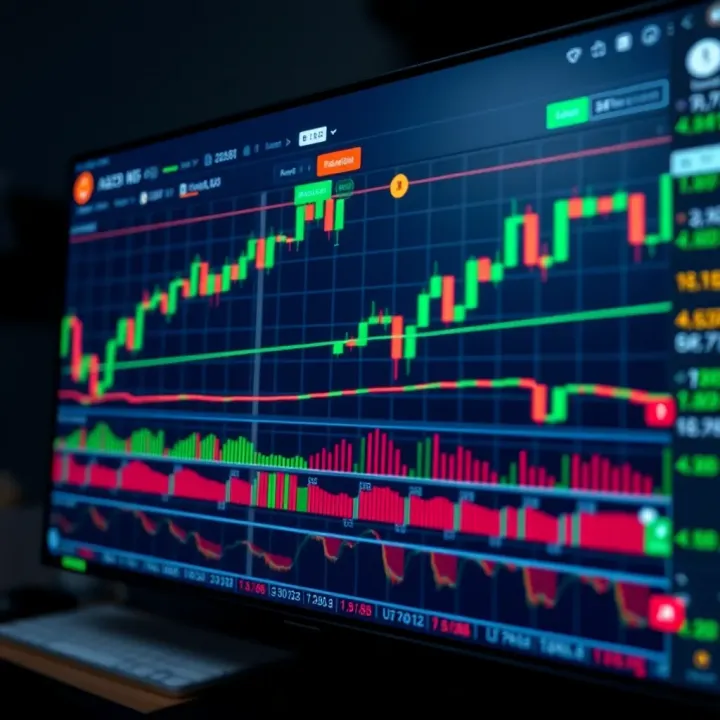
To start, you set up accounts on both TradingView and Deriv. On TradingView, customise your charts to show relevant indicators like RSI (Relative Strength Index), MACD (Moving Average Convergence Divergence), or Bollinger Bands, according to your trading strategy. These indicators help spot potential entry and exit points, especially in volatile markets like forex.
Meanwhile, ensure your Deriv account is properly funded and familiarise yourself with its trade types and expiry settings. Kenyan traders often use Deriv for short-term volatility trades, where quick decision-making backed by strong chart signals from TradingView can make a big difference.
Synchronising your analysis on TradingView and trade execution on Deriv can sharpen your market timing, helping to protect profits and reduce losses.
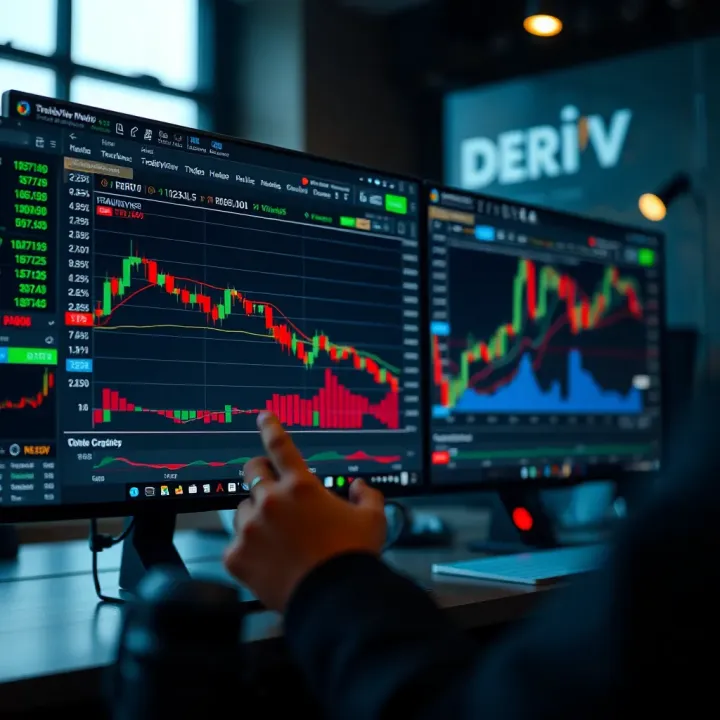
A practical way to use both is by running TradingView charts on one screen for real-time analysis while placing trades on the Deriv platform on another. For instance, if your preferred indicator on TradingView signals a bullish breakout, you can immediately place a corresponding binary option or digit trade on Deriv.
Remember, while TradingView provides deep market insights, successful trading also depends on risk management and monitoring your portfolio actively on Deriv.
Kenyan traders looking to improve their market approach will find this integration valuable, especially when combined with local context such as reacting to economic news from CBK or election periods impacting the NSE.
By mastering setup and practical use of TradingView charts with Deriv trades, you stand a better chance of making informed, timely decisions that reflect real market conditions rather than guesswork.
Understanding the strengths of TradingView and Deriv is key for Kenyan traders who want to improve their trading decisions. These platforms serve different but complementary functions, and using them together can provide a more rounded trading approach.
TradingView is widely recognised for its advanced charting and technical analysis tools. Unlike many platforms that offer basic charts, TradingView provides highly customisable charts, access to a vast range of indicators, and social features like sharing trade ideas. For example, Kenyan traders can use TradingView to apply indicators like Moving Averages or Relative Strength Index (RSI) on forex pairs, commodities, or cryptocurrencies, making it easier to spot trends or potential reversals. Importantly, TradingView pulls data from multiple global exchanges, giving traders access to real-time markets beyond the Kenyan shilling or East African securities.
Deriv is a user-friendly online trading platform that offers diverse instruments such as forex, indices, synthetic indices, and options. What makes Deriv particularly useful is its flexibility: traders can execute trades quickly and with low minimum deposits. The platform also supports various order types like stop-loss and take-profit, allowing traders to manage risk better. In addition, Deriv provides a demo account option ideal for beginners wanting to practise without risking real cash. For Kenyan traders, Deriv’s accessibility and localised payment options, including M-Pesa, simplify the process of funding accounts and withdrawing profits.
By pairing TradingView’s rich charting capabilities with Deriv’s execution environment, Kenyan traders get the best of both worlds. Traders first identify potential trades on TradingView by studying trends and indicators, then execute trades on Deriv where they can use those insights directly. This approach helps avoid overreliance on Deriv’s own charts, which may be less detailed, and reduces guesswork. For instance, a trader might spot a breakout pattern on TradingView’s forex chart, and immediately place an informed trade on Deriv with a properly set stop-loss.
Using both platforms means you can combine detailed analysis with quick execution, giving you an edge especially in fast-moving markets.
Moreover, this integration helps Kenyan traders stay competitive despite slower internet connections or occasional platform downtimes, since they can run analysis offline or on a lightweight device and activate trades as needed. The mix also offers a wider perspective: TradingView’s community ideas and scripts expose users to fresh strategies while Deriv’s instruments allow practical application.
In summary, knowing what each platform brings to the table and how to use them in tandem is a big step towards smarter, more confident trading in Kenya’s growing online market.
Connecting TradingView and Deriv unlocks powerful tools for Kenyan traders aiming to make informed decisions. Proper setup ensures you access real-time data, execute trades instantly, and use advanced charting without glitches. This section breaks down the essential steps to get started and make the most of the two platforms working together.
First, open accounts on both TradingView and Deriv. Signing up on TradingView is straightforward—use your email or Google account and choose a subscription plan depending on the features you need. Kenyan traders often start with the free plan which offers basic charts, upgrading later as strategies get more complex.
Deriv registration requires submitting personal details, including your Kenyan national ID or passport for verification. Ensure you complete KYC (Know Your Customer) processes to access full trading services. Once your accounts are live, adjust settings like preferred currency (choose Kenyan Shilling if available) and time zone (East Africa Time) to align platforms.
Real-time data is the backbone of successful trading. On TradingView, enable live data feeds to see up-to-the-second price movements of assets like forex, commodities, or indices offered by Deriv. While TradingView provides wide market coverage, Deriv delivers the trading execution backed by those price feeds.
Kenyan traders should verify that data syncs without delay. For example, when monitoring EUR/USD on TradingView, prices should naturally reflect on Deriv within moments to avoid slippage. High-speed internet and reliable devices contribute to smoother data flow and timely decision-making.
Linking TradingView to Deriv involves syncing analysis with execution. Though the platforms operate independently, you can use TradingView’s charting to plan trades and then place orders directly on Deriv.
A common workflow involves:
Opening the Deriv platform alongside TradingView on your PC or mobile.
Conducting your technical analysis using TradingView indicators and patterns.
Noting key entry, exit, and stop-loss points from TradingView.
Executing trades manually on Deriv based on these insights.
Some third-party tools and scripts can semi-automate this process, but Kenyan traders should stay cautious to avoid breaches of Deriv’s terms or security risks.
Remember, this integration maximises your analytical edge but demands discipline in trade execution and risk management.
By carefully setting up and configuring TradingView and Deriv accounts, ensuring timely market data, and linking chart insights with live trading, Kenyan traders can sharpen their competitive edge in financial markets. Clear setup and syncing reduce errors and help seize trading opportunities confidently.
TradingView indicators are powerful tools that add precision and clarity to your decision-making on the Deriv platform. These indicators digest raw market data into understandable signals, helping Kenyan traders to spot trends, measure momentum, and time their entries and exits effectively.
Some indicators are particularly well-suited for Deriv assets like forex pairs, synthetic indices, and commodities. The Relative Strength Index (RSI) is widely used to identify overbought or oversold conditions, signalling potential reversals. Meanwhile, Moving Averages (MAs)—both Simple Moving Average (SMA) and Exponential Moving Average (EMA)—help smooth out price fluctuations to reveal the general trend direction. Bollinger Bands offer insight into market volatility, showing when prices might break out or retract. For example, a Kenyan trader watching the USD/KES pair could use the 14-period RSI to check whether the currency is likely to reverse after heavy buying or selling.
The beauty of TradingView lies in its flexibility. You can tweak indicator settings—such as period length or calculation method—to suit your style and the asset being traded on Deriv. Scalpers may prefer shorter MAs for faster signals, while swing traders benefit from longer periods that filter out noise. Custom alerts can be set when indicators hit certain levels, enabling timely action even during a busy workday or boda boda commute. These customisations ensure you're not relying on generic signals but rather on ones fine-tuned for your unique trading goals.
Signals from indicators need context. For example, a crossover between short and long-term EMAs may indicate a trend shift, but without confirmation from volume or support levels, acting solely on this could be risky. Combining multiple indicators reduces false signals. If the RSI shows oversold while Bollinger Bands squeeze tightly, it hints at a possible strong upward move. Kenyan traders using Deriv should watch for such confluences before placing trades. Also, remember to adjust stop-loss points based on indicator readings to protect your capital against sudden market swings.
Using TradingView indicators alongside Deriv gives Kenyan traders a clearer picture of market action, helping them to base decisions on data-driven signals rather than guesswork.
In the end, mastering TradingView’s indicators and interpreting their signals properly adds a layer of confidence and discipline to your Deriv trading. With consistent practice, you’ll notice better timing and more successful trades that align with your risk appetite and market conditions.
For Kenyan traders, combining TradingView’s powerful charting tools with the Deriv platform can be a strong edge, but success depends on practical approaches. Knowing how to manage risk, pick the right timing, and optimise your trading devices matters a lot when navigating volatile markets. These tips aim to sharpen your trading skills and reduce unnecessary losses.
Risk management is the backbone of smart trading. Setting stop-loss points on Deriv helps you limit losses when trades go against you. For example, if you buy a forex contract at 110.50 and want to limit your maximum loss to 1%, place a stop-loss roughly 1% below that price. TradingView’s charts can help you see past support and resistance levels to set more realistic stops, rather than guessing. Avoid setting stop-loss orders too close to market noise or too far where losses become big. This balance ensures you guard your capital while allowing trades enough room to move.
Understanding market conditions is key to timing your trades well. Kenyan traders often face periods of low liquidity, such as during local public holidays or weekends, which can cause erratic price movements. TradingView’s economic calendar and live market news widgets provide up-to-date information on events that affect asset prices. For example, you might hold off trading currency pairs affected by major US Federal Reserve announcements. Deriv also offers demo accounts to practice timing without risking real money. Knowing when to enter or exit trades based on market volatility can save you from rushed decisions.
Kenyan traders often switch between devices, so using TradingView and Deriv on both mobile and desktop is crucial. The mobile apps are convenient for monitoring trades while on the go, like commuting in a matatu or grabbing nyama choma after work. But the desktop version offers better chart customisation, multiple indicators, and faster order execution. Make it a habit to prepare your trade plans on desktop, then monitor on mobile during the day. Also, keep your apps updated and maintain stable internet connections to avoid interruption during critical moments. Safaricom’s 4G coverage in urban areas usually supports this, but check your location if you rely on mobile data.
Practical trading is as much about using the right tools as about timing and risk management. Kenyan traders who apply these tips with TradingView and Deriv will see better control over their trades and improved confidence.
By applying these hands-on strategies, you can make the most of your trading setup in Kenya and boost your chances of success in the markets.
Using TradingView alongside Deriv offers great potential for smarter trading decisions, yet some challenges can catch traders off guard. Understanding common pitfalls and how to handle them is key, especially for Kenyan traders who rely on steady internet and up-to-date regulatory knowledge. This section highlights practical solutions related to data delays, automation risks, and compliance with local rules.
Both TradingView and Deriv demand stable internet connections to deliver real-time market data and execute trades promptly. In Kenya, network interruptions or slow speeds can cause delays, affecting trade timing and accuracy. For instance, a lag in chart updates might lead you to enter or exit a position late, hurting potential profits.
To tackle this, it's wise to:
Use a reliable internet provider with sufficient bandwidth, preferably fibre optic where available.
Supplement your connection with mobile data bundles from Safaricom or Airtel as backup.
Enable offline alerts on your phone to monitor price levels without continuous internet.
Traders should also regularly refresh TradingView charts and avoid running multiple heavy apps simultaneously, which can slow down devices and increase delay risk.
TradingView offers many automated indicators and alert systems, which are tempting to trust completely. However, relying solely on these tools without human judgement can lead to costly mistakes. Automated signals might not capture sudden market shifts, like unexpected political news affecting the NSE or currency pairs.
Experienced traders combine signals with their own analysis, considering geopolitical events or fundamental data. Kenyan traders, for example, should watch local election outcomes or CBK monetary policy announcements that affect shilling-based assets.
To maintain control:
Treat automated signals as advisory, not absolute commands.
Backtest strategies using historical data before live trading.
Keep a trading journal to track how signals perform over time.
Kenya's online trading environment evolves with regulatory policies from bodies like the Capital Markets Authority (CMA) and Central Bank of Kenya (CBK). Changes in licensing rules, taxation, or restrictions on derivatives could affect your use of platforms like Deriv.
For example, introduction of limits on margin trading or new levy on profits could impact your strategy and returns. Keeping abreast of such developments helps avoid penalties and ensures your trading remains compliant.
Ways to stay informed include:
Regularly visiting CMA and CBK official websites for announcements.
Joining Kenyan trading forums and social media groups where updates are discussed.
Consulting financial advisors familiar with Kenyan capital markets.
Staying ahead of these challenges lets you focus on making smarter, safer trading decisions using TradingView and Deriv. Being proactive around connectivity, automation, and regulation safeguards your efforts and funds.
Keeping these common issues in check ensures a smoother, more profitable trading experience tailored to Kenya's unique market conditions and infrastructure.
Explore how Deriv and TradingView charts work together 📈 for smarter trading. Learn tips and tricks to improve your market analysis for effective decisions.

🔧 Learn how to seamlessly connect Deriv trading functions with TradingView charts. Explore key features, steps, and tips for smooth integration and better trades.
🤖 Explore how trading bots work on Deriv.com, their benefits, risks, setup tips, legal points, and challenges for smarter trading decisions.

🔍 Learn how to link Deriv with MetaTrader 5 for smooth trading 🚀 Get setup tips, explore features, try strategies, and manage risk effectively!
Based on 8 reviews