
Forex Trading in Kenya with M-Pesa: A Practical Guide
Learn how to trade forex safely in Kenya using M-Pesa for quick deposits and withdrawals. Discover trusted platforms, legal tips, and practical steps to grow your KSh wallet! 📈💰
Edited By
Daniel Foster
Forex trading involves buying and selling currencies to make a profit. Unlike stocks or bonds, forex operates 24 hours a day, five days a week, providing flexibility for traders. The market’s daily turnover exceeds $6 trillion globally, making it the world’s largest financial market. For Kenyan traders, this opens opportunities to trade from home or office with just a computer and internet connection.
Transactions happen in currency pairs, like USD/KES (US Dollar against Kenyan Shilling) or EUR/USD (Euro against US Dollar). When you believe one currency will strengthen against another, you buy the pair; if you expect it to weaken, you sell. For example, if you think the US Dollar will rise against the Kenyan Shilling, you would buy USD/KES.
Trading forex requires understanding some basics:
Currency pairs: These are the quotes that tell you how much one currency is worth in another.
Pip: This is the smallest price move in a currency pair. For most pairs, one pip equals 0.0001.
Leverage: Brokers offer leverage so you can control a bigger position with a smaller deposit, but it increases risk.
Spread: The difference between the buying and selling price, representing the broker’s fee.
Start small and never invest money you cannot afford to lose. Forex trading can be profitable but comes with risks that need careful management.
In Kenya, many platforms allow forex trading with easy funding options like M-Pesa, bank transfers, or mobile banking. Ensuring your broker is licensed by the Capital Markets Authority (CMA) helps protect your money.
This guide will cover clear steps to get started, effective strategies, and how to manage risks, helping you approach forex trading with confidence and practical knowledge.
Grasping the fundamentals of forex trading sets the stage for making informed decisions. This knowledge helps you understand how currency prices move, what affects these movements, and who shapes the market dynamics. Without this base, beginners may find themselves lost in jargon or making hasty trades without knowing the bigger picture.
Forex trading involves buying one currency while simultaneously selling another, making up a currency pair. For example, if you trade the USD/KES pair, you’re exchanging US dollars for Kenyan shillings or vice versa. The goal is to profit from price changes between these two currencies.
This market operates differently compared to stocks or commodities. Forex is a truly global market running 24 hours a day on weekdays, due to its decentralised nature across various countries and time zones. Unlike a stock exchange that closes after business hours, forex never sleeps, so traders in Nairobi can pick active trading times even when other markets are closed.
Central banks, like the Central Bank of Kenya (CBK), play a major role by controlling monetary policies that influence currency value. For instance, when CBK changes interest rates, it affects the shilling’s strength compared to other currencies. Central banks may also intervene directly to stabilise or boost their currency.
Commercial banks and brokers act as middlemen facilitating currency trades for clients, including large institutions and retail traders. Brokers offer platforms for individual traders in Kenya to access the forex market, often via online trading apps. Choosing the right broker ensures you get fair prices, good execution, and safety for your funds.
Retail traders like you and institutional investors such as hedge funds participate with varying goals. While institutions trade in huge volumes based on macroeconomic strategies, retail traders often seek smaller profits using strategies tailored to short-term price moves. Understanding your place and purpose in the market helps manage expectations.
Forex trading is split into several sessions aligning with major financial hubs: Sydney, Tokyo, London, and New York. Nairobi lies in the East Africa Time (EAT) zone, so the key sessions to watch are London and New York, which overlap somewhat during afternoon hours in Kenya.
Trading during these overlapping hours often sees higher liquidity and more price action, offering better opportunities for traders. For example, the 3 pm to 5 pm EAT window frequently experiences higher volatility due to London and New York markets both being active.
To succeed in forex trading, knowing when the market moves actively can improve your timing and avoid hours of low activity where spreads widen and trading becomes less predictable.
By mastering these basics, Kenyan traders can step forward with confidence, understanding what they trade, who moves the market, and when the best trading moments occur.
Starting forex trading requires careful preparation, especially if you are new to the market. This phase is about choosing the right partners, setting up your trading environment correctly, and practising smartly before risking real money. Establishing these foundations helps you avoid common pitfalls and increases your chances of consistent success.
A trustworthy forex broker usually holds regulation from authorities like the Capital Markets Authority (CMA) in Kenya or international bodies such as the Financial Conduct Authority (FCA) in the UK. Regulation means the broker follows rules designed to protect traders from fraud and unfair practices. For example, Kenyan traders should check if the broker is licensed by CMA, which ensures they meet financial and operational standards suitable for local markets.
Using an unregulated broker risks your funds and data, especially since forex trading involves large leverage and significant money flows. A reliable broker also offers dispute resolution channels if something goes wrong, giving you peace of mind.
For new traders, a broker should offer easy-to-use platforms compatible with mobile devices and desktops. Brokers that provide clear educational materials and quick customer support make learning faster. Also, look for reasonable spreads and commissions; high costs reduce your potential profits, especially during the early stages when trade sizes may be smaller.
Platforms with simple charting tools and robust demo accounts encourage practice before real investment. Some brokers also allow for micro or mini accounts, letting you trade with smaller amounts, which is ideal for beginners.
Forex brokers often offer various account types, such as standard, mini, or Islamic accounts. Standard accounts require higher deposits and allow trading larger volumes. Mini accounts accept smaller deposits and offer smaller trade sizes, providing a lower-risk way to get started. Islamic accounts cater to traders who avoid interest due to religious reasons.
Choosing the right account type depends on your starting capital and trading goals. For instance, if you have KSh 10,000 available for trading, a mini account suits better than a standard account requiring KSh 100,000 or more.
Many Kenyan traders prefer the convenience of funding their forex accounts via M-Pesa. Some brokers integrate directly with M-Pesa, allowing instant deposits and withdrawals, which makes managing trading funds more straightforward. Bank transfers remain an alternative but can be slower and attract additional charges.
Using M-Pesa is especially practical for those trading from mobile, ensuring seamless cash flow control without needing to visit the bank or use foreign cards.
Demo accounts allow you to trade with virtual money while experiencing real market conditions. This setup helps you grasp how orders work, test strategies, and get familiar with the trading platform without risking your KSh. Practising builds confidence and reduces mistakes when moving to live trading.
To get the most from a demo account, treat it as you would with real money. Set limits, practise entering and exiting trades quickly, and follow price moves like a serious trader. Also, monitor your emotions, even if the money is virtual, to build discipline and avoid impulsive decisions once live trading starts.
Starting correctly with the right broker, account, and practice schedule is your first step towards consistent forex trading success.
Understanding basic forex trading strategies and tools is key for anyone starting in the forex market. These strategies help traders approach the market with a plan rather than guesswork, improving chances of success. Tools like charts, indicators, and economic reports offer insights to interpret price movements and timing better. For Kenyan traders, applying these strategies alongside careful risk management can protect capital even amid volatile currency swings.
Fundamental analysis looks at economic data to gauge the health of a country’s economy, which influences its currency value. Key indicators include inflation rates, GDP growth, employment figures, and interest rates. For instance, if the Central Bank of Kenya raises interest rates, it tends to make the shilling more attractive to investors, potentially strengthening it against other currencies.
Breaking news or scheduled releases like the US Nonfarm Payrolls or Kenya’s GDP figures often cause sharp price shifts in forex markets. Traders watch news closely because unexpected results can move prices within minutes. For example, if inflation in the US is higher than expected, the dollar might gain strength, affecting currency pairs like USD/KES.
Technical analysis focuses on past price data, mainly by reading charts to predict future movements. Traders use tools like Moving Averages, RSI (Relative Strength Index), and MACD (Moving Average Convergence Divergence) to spot momentum or reversals. A Kenyan trader might observe the 50-day moving average on EUR/USD to decide when to enter or exit a trade.
A trend shows the general direction of a currency’s price—up, down, or sideways. Support levels are price points where currency tends to stop falling, while resistance levels are where it struggles to rise. Identifying these helps traders place orders wisely, for example, buying near support to minimise risks.
This strategy involves trading in the direction of the prevailing trend. If the USD/KES pair is steadily rising, a trend follower buys and holds until signs show the rise is weakening. It’s simple and fits long-term perspectives, ideal for beginners still learning market rhythms.
Range traders spot currencies moving between defined support and resistance levels without clear trends. They buy near support and sell near resistance. For example, if USD/EUR oscillates between 1.10 and 1.15 consistently, a range trader can capture profits by trading these swings.
Breakout trading focuses on moments when prices move beyond support or resistance levels, signalling potential new trends. A trader watching GBP/USD might enter a buy position as price breaks above a strong resistance point, expecting momentum to push prices higher. This method requires swift action and good timing.
Risk management is the backbone of successful forex trading, especially for beginners navigating volatile markets. It involves strategies and tools to control potential losses and safeguard your trading capital. Without managing risks, even a few bad trades can wipe out your account, leaving you with little room to recover or learn.
Controlling losses is essential because forex is unpredictable; no one can consistently forecast market movements accurately. Protecting your capital means you can stay in the game longer and have the chance to grow your account steadily. For example, if you risk 10% of your trading capital on one trade and it goes against you, that’s a huge dent hard to bounce back from. Many experienced traders recommend risking only 1-2% per trade to avoid big losses that can quickly exhaust your funds.
Common mistakes include chasing losses or doubling down to recover, which often leads to even deeper losses. Another error is ignoring risk tools like stop-loss orders or trading without a clear plan. These habits expose traders to unnecessary risks and stress that cloud decision-making.
Setting an effective stop-loss means deciding in advance the maximum loss you are willing to accept for each trade. This order automatically closes your position when the price hits a certain unfavourable level, preventing emotions from dictating when to exit. For instance, if you buy the USD/KES pair at 110 but place a stop-loss at 108, your loss will be limited if the price falls.
Knowing when to take profit is just as important. A take-profit order locks in gains once the market reaches your target price. This avoids greed, which often causes traders to hold on hoping for more but end up losing unrealised profits. Setting realistic profit targets based on recent price action or key support/resistance levels helps maintain discipline.
Leverage in forex means borrowing funds to control larger positions than your capital allows. While it can magnify profits, it also increases potential losses. For example, with 1:100 leverage, KSh 1,000 controls KSh 100,000 worth of currency. This magnification means a small adverse market move can wipe out your deposit quickly.
High leverage is risky, especially for beginners. It may seem tempting to use maximum leverage to boost gains, but this often backfires. A safer approach is to use low leverage (like 1:10 or 1:20) to keep losses manageable and reduce stress. Remember, it’s about preserving capital to trade another day, not just chasing quick profits.
Protecting your capital through proper risk management is not an option but a necessity. It keeps you afloat through inevitable market ups and downs and builds a foundation for consistent trading success.
With these principles, you can approach forex trading with a clearer mindset and better control over your investments.
Trading forex in Kenya requires more than understanding market basics; you must navigate local regulations, payment systems, and common risks. Practical tips tailored to Kenya help beginners trade confidently and securely. For example, knowing how to verify licensed brokers or use M-Pesa for seamless deposits can protect your investments and save time.
The Capital Markets Authority (CMA) regulates forex trading within Kenya to protect investors and ensure fair practices. It licenses brokers and monitors their activities, making it a reliable source to confirm a broker's legitimacy before you start trading. The CMA’s oversight means that licensed brokers must meet certain standards, which reduces the chance of fraud or sloppy services.
To verify if a broker is licensed, visit the CMA website or request the broker's licence details directly. Licensed brokers will comply with Kenyan law and usually provide clear information about their registration. Avoid brokers who cannot prove their licence, as they might operate outside regulations—a common red flag leading to losses.
M-Pesa is the leading payment method for forex deposits and withdrawals due to its convenience and secure transactions. Many brokers integrate M-Pesa allowing you to fund your trading account or cash out winnings directly to your mobile wallet without delays. This accessibility is vital, especially for traders outside Nairobi who might not have easy access to bank branches.
Besides M-Pesa, some brokers accept bank transfers, credit/debit cards, and other e-wallets. These options vary in transaction speeds and fees, so pick the one that suits your trading style. Always confirm the security measures of the payment system, such as encryption and two-factor authentication, to protect your funds and data.
Watch out for platforms promising guaranteed profits or unrealistic returns. Such red flags often signal scams or deceitful schemes. Also, beware of brokers offering overly high leverage with little explanation, as this can quickly wipe out your money.
Protect your personal and financial information by trading only through secured websites and platforms. Use strong passwords and avoid sharing sensitive details like your KRA PIN or bank account numbers casually. Regularly update your passwords and monitor your accounts for suspicious activities to keep your trading safe.
Always prioritise security and regulatory compliance when choosing brokers or payment methods in Kenya. Doing so reduces risks and builds your confidence to trade effectively.
Learn how to trade forex safely in Kenya using M-Pesa for quick deposits and withdrawals. Discover trusted platforms, legal tips, and practical steps to grow your KSh wallet! 📈💰
💹 Learn how to trade forex online safely in Kenya. Discover trusted platforms, payment methods like M-Pesa, risk tips, and local regulations to boost your trading skills.
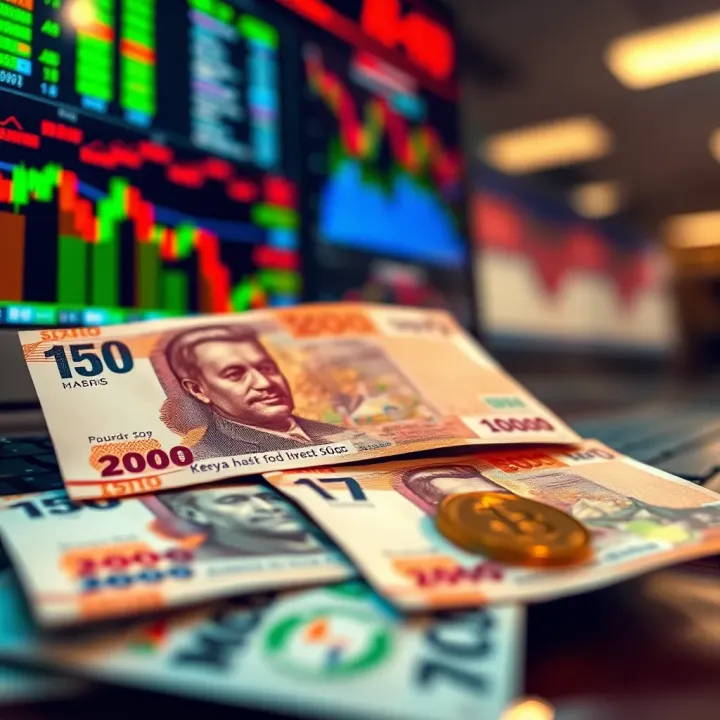
📊 Learn forex trading basics for beginners in Kenya, including market insights, practical start-up tips, risk management, and navigating local financial conditions confidently.
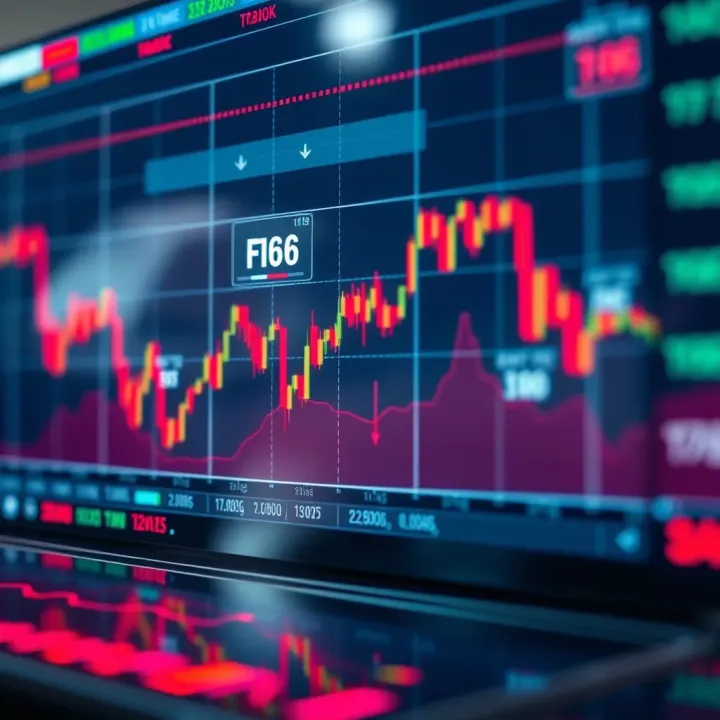
📉 Get a clear, practical guide to forex trading in Kenya! Understand market basics, currency factors, risk management, and tech setup to trade confidently.
Based on 13 reviews