

Guide to Trading Derivatives in Kenya
Explore a detailed guide on derivative trading in Kenya 🇰🇪. Learn about types, risks, strategies, and local regulations to trade smarter and safer 📈.
Edited By
George Mitchell
Peer-to-peer (P2P) derivatives are shaking up how derivative contracts are traded, especially for individual investors and traders here in Kenya. Instead of going through traditional exchanges or banks, P2P derivatives enable direct contracts between two parties. That means you can agree terms, settle contracts, and manage exposures without the usual middlemen—the brokers or clearing houses.
This section explains what P2P derivatives are and why they matter for investors who want more control, lower costs, and faster access to derivative products. Unlike standard derivative markets where institutions dominate and trading can be complex, P2P derivatives offer a simpler, more transparent way to hedge risks or speculate on price movements.
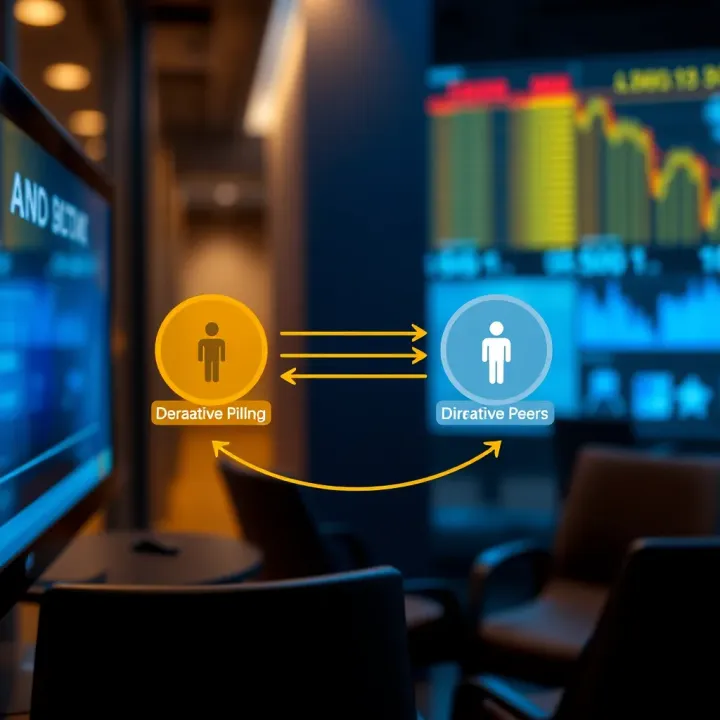
In P2P derivative trading, two parties make a contract that defines the underlying asset, expiry, payments, and conditions. For example, you might enter a P2P contract betting on the future price of coffee or the NSE 20 Share Index. These contracts don't require a centralized exchange; instead, technology platforms—often using blockchain—record and enforce agreements.
This direct link reduces overhead costs and speed up settlements. You can negotiate terms individually, tailoring contracts that suit your risk appetite and market view without being boxed into standardised products.
Lower Fees: Without brokers or clearinghouses, transaction costs drop significantly.
Flexibility: Contracts can be customised to cover unique local assets or market scenarios.
Accessibility: Investors from Nairobi to Kisumu can participate directly, provided they have internet access.
Suppose an exporter in Mombasa wants to secure the KSh/USD exchange rate for earnings expected in three months. They can create a P2P derivative contract with a trader in Nairobi willing to take the opposing position. Both avoid banks' charges and lengthy paperwork common in hedging forex risk.
P2P derivatives democratise access to complex financial tools, making them more affordable and user-friendly for Kenyan investors and traders.
Understanding these basics helps you navigate the P2P derivatives market confidently. The next sections will cover types of P2P contracts, risks, and how existing and upcoming technology supports this growing financial innovation.
To understand peer-to-peer (P2P) derivatives, it's essential first to grasp what derivatives are and how P2P trading changes the game. This foundation helps financial professionals appreciate the practical benefits and challenges these instruments present in today’s markets, especially in Kenya where the financial ecosystem is gradually embracing digital innovations. Knowing these basics enables traders, investors, and brokers to make informed decisions when exploring P2P derivative contracts.
Derivatives are financial contracts whose value depends on the price of an underlying asset, such as stocks, commodities, currencies, or interest rates. Their primary purpose is to manage risk or speculate on price movements without owning the asset itself. For instance, a farmer in Eldoret might use derivatives to lock in a price for maize, protecting against future price drops before harvest.
Common derivatives include futures, options, and swaps. Futures involve agreements to buy or sell an asset at a set price on a future date; options give one party the right, but not the obligation, to buy or sell an asset at a specified price; and swaps are agreements to exchange cash flows or other financial instruments, often used to manage interest rate or currency risks. These contracts provide flexibility and risk management tools that Kenya’s growing financial sector increasingly values.
Peer-to-peer trading means that buyers and sellers connect directly without a middleman or central intermediary. This direct counterparty interaction can reduce costs and allow for more customised contracts. For example, an individual investor in Nairobi might trade a derivative contract directly with a farmer in Kisumu, agreeing on terms that suit both parties' specific needs rather than relying on standardised contracts from a large exchange.
Without a central exchange, P2P trading often happens on online platforms or through blockchain technology. This removes traditional exchange fees and can speed up settlement times. However, it also means the parties must trust each other or use technologies like smart contracts that automatically enforce the terms agreed. In Kenya, this direct trading opens doors for investors and small businesses that previously had limited access to derivatives markets dominated by big institutions.
Direct interaction between counterparties gives more control but requires caution, as it exposes traders to risks that traditional exchanges typically manage.
Derivatives allow risk management without owning the asset.
P2P trading cuts out the middleman, lowering costs.
Contracts can be tailored to specific needs.
Absence of central exchanges demands trust or technological safeguards.
Understanding these fundamentals sets the scene for diving deeper into how P2P derivatives operate, their benefits, and risks, especially within Kenya’s unique financial landscape.

Understanding how peer-to-peer (P2P) derivative trading works is key for anyone looking to participate directly in these markets. Unlike traditional platforms where intermediaries dominate, P2P trading lets investors connect directly, making the process more tailored and often more cost-effective. This approach pivots on clear steps like matching counterparties, agreeing on contract terms, and settling agreements efficiently.
Matching counterparties happens when two investors with opposite market views or hedging needs find each other. For example, one might want to hedge against rising maize prices, while another bets on a fall. Platforms facilitating such trades help connect these parties, either through matching algorithms or peer networks. This direct connection eliminates the need for middlemen, which can cut down transaction delays.
Once parties are matched, the next step is contract terms agreement. Here, both sides negotiate important details like contract size, expiry, and conditions. Imagine a small-scale trader in Kisumu agreeing with a Nairobi-based investor on a swap contract to exchange crop yield risks. They specify terms clearly to avoid future disputes, tailoring contracts to suit specific risk appetites or investment goals. This flexibility is a core advantage of P2P derivatives.
Settlement mechanisms in P2P derivatives ensure that once contracts mature, exchanges or payments occur smoothly. Settlements can be cash-based or asset-delivery based, depending on the contract. Some platforms use escrow services or digital wallets where funds are held until obligations are fulfilled. For instance, if two parties agree to a futures contract on coffee prices, on settlement day, the agreed amount exchanges hands automatically if conditions are met, reducing credit risk.
Online platforms act as digital marketplaces where investors create, find, and trade derivative contracts directly. They simplify the P2P process by providing user-friendly interfaces, real-time price feeds, and easy contract management tools. Consider Kenyan fintech startups developing apps where farmers or investors negotiate weather derivatives, providing access beyond big cities.
The use of blockchain and smart contracts is transforming P2P derivatives further. Blockchain provides a transparent and tamper-proof ledger where contract terms and trades are recorded. Smart contracts automatically execute terms once predefined conditions are met, such as releasing payments after harvest reports. This innovation reduces reliance on trust and manual processes, lowering fraud risk and speeding up settlements.
By cutting out intermediaries and using technology, P2P derivative trading is opening doors for more people in Kenya’s financial ecosystem to manage risk and invest actively.
Overall, knowing these operational details helps investors appreciate the practical benefits and considerations before engaging in peer-to-peer derivative trading.
Peer-to-peer (P2P) derivatives bring a fresh approach to the trading of financial contracts by allowing parties to deal directly without middlemen. This structure offers distinct advantages, especially in terms of reducing costs and widening market access. Understanding these benefits helps investors and traders see why P2P derivatives are gaining traction, particularly for those seeking more control and flexibility.
Eliminating intermediaries simplifies the trading process by connecting buyers and sellers directly. Traditional derivatives markets often involve brokers, clearinghouses, or exchanges that add extra layers to transactions, inflating costs and slowing down settlements. With P2P arrangements, investors can negotiate terms and execute trades themselves or via digital platforms, cutting out these middlemen. For example, a Nairobi-based forex trader might use a P2P platform to enter an option contract directly with a counterparty without paying broker commissions, lowering their overall trading expenses.
Lower transaction costs follow naturally from removing intermediaries. Without the fees charged by exchanges or clearing agents, traders often pay only a nominal platform fee or none at all. This is particularly relevant in Kenya, where high transaction costs can deter smaller investors from entering derivatives trading. Lower fees let individuals and small businesses participate more actively and frequently, increasing liquidity and offering more competitive prices. For instance, using blockchain-based smart contracts for P2P trades can automate settlements, reducing the need for manual checks and thus cutting operational costs further.
Opportunities for individual investors in P2P derivatives are broader because these contracts don't require the large capital outlays usually demanded by traditional markets. Individuals in Mombasa or Kisumu with modest capital can engage in derivative contracts tailored to their risk appetite via user-friendly online platforms. This inclusion promotes financial empowerment beyond institutional players, helping diversify investment portfolios and manage risk without barriers posed by high minimum fees or strict regulatory prerequisites.
Flexibility in contract structures is another benefit that appeals to many investors. Since P2P contracts are bilateral agreements, counterparties can customise terms far more than standardised exchange-traded derivatives permit. For example, two farmers can agree on a swap contract that fits the particular harvest cycles and price risks of their specific crops, something generally not possible on large, rigid exchanges. This adaptability helps Kenyan market participants design instruments aligned with their actual business needs or investment strategies, making hedging and speculation more precise and practical.
In summary, peer-to-peer derivatives provide practical advantages by cutting costs and opening derivatives trading to a wider pool of investors, with the added benefit of adaptable contract options. These features support Kenya's evolving financial markets and encourage deeper market participation across different sectors.
Peer-to-peer (P2P) derivatives bring new opportunities but come with specific risks that investors and traders must understand. Unlike traditional derivatives traded on established exchanges, P2P derivatives match counterparties directly, which can expose participants to distinct challenges, particularly around trust, legal clarity, and market oversight.
Default risk means the possibility that one party in the derivative contract may fail to honour their side of the deal. In P2P setups, there is no clearinghouse to guarantee performance, so if one party defaults, the other bears the loss. For example, if an investor enters into a P2P swap to hedge currency exposure but the counterparty fails to settle when due, the investor is left exposed and may struggle to recover losses, especially if the counterparty lacks sufficient creditworthiness or is hard to trace.
Default risk is particularly relevant in Kenya’s informal or less regulated financial segments, where counterparties may include individual traders or small firms without strong credit histories. This risk affects confidence in P2P derivatives and can limit wider adoption without proper safeguards.
Mitigation strategies for default risk include requiring collateral or margin from participating parties. Platforms facilitating P2P derivative trades may ask traders to lock up assets upfront to cover potential losses. This approach aligns interests and reduces the chance of default. Another method is conducting thorough credit evaluations or using reputational scoring systems, giving participants clearer information about trading partners.
Besides collateral, investors can diversify across multiple counterparties to spread risk rather than concentrating large trades with a single party. Also, utilising smart contracts on blockchain that automatically enforce contract terms can minimise disputes and ensure settlement only if conditions are met. For instance, a Kenyan P2P derivatives platform could harness blockchain to hold funds in escrow until both sides fulfil their obligations.
Compliance challenges in Kenya arise because the regulatory framework for derivatives, especially P2P arrangements, is still evolving. The Capital Markets Authority (CMA) and Central Bank of Kenya (CBK) regulate various aspects of derivatives and financial markets, but specific rules addressing P2P derivatives are limited. This gap creates uncertainty about licensing requirements, permissible counterparties, and consumer rights, which may deter investors or lead to inadvertent non-compliance.
Given Kenya’s push to expand fintech and innovations such as blockchain trading, regulators face a balancing act between fostering growth and ensuring market stability. Without clear guidelines, P2P derivative platforms and users may find themselves operating in grey areas, exposing them to legal risks or enforcement actions.
Impact on investor protection is significant since insufficient regulation means investors may not have guaranteed recourse if things go wrong. Without robust oversight, fraud, misrepresentation, or unfair practices might persist undetected. Kenyan investors relying on P2P derivatives may lack protections like dispute resolution mechanisms, compensation funds, or clear information disclosures found in regulated markets.
This legal uncertainty also affects transparency. Investors may struggle to verify the legitimacy of counterparties or the enforceability of contracts. Hence, due diligence and risk awareness become critical. Taking part in P2P derivatives demands careful consideration of these legal gaps and staying informed about evolving regulatory updates within Kenya’s financial sector.
Understanding these risks helps investors navigate P2P derivative markets more confidently and pressure stakeholders to develop stronger protections.
In summary, while P2P derivatives offer cost and access advantages, the challenges around counterparty risk and unclear regulations must be managed carefully. Investors should seek platforms with credible risk controls and keep up with regulatory developments to protect their interests effectively.
The regulatory environment plays a big role in shaping how Peer-to-Peer (P2P) derivatives operate in Kenya. Because these contracts involve direct transactions between individuals without a central clearinghouse, the rules covering them impact everything from market access to risk management. Traders and investors need to understand the current framework and possible changes so they can navigate the P2P derivative market safely and effectively.
The Capital Markets Authority (CMA) and the Central Bank of Kenya (CBK) are the main regulators overseeing derivatives trading in Kenya. CMA primarily monitors securities and derivatives traded on licensed platforms, ensuring transparency and protecting investors from fraud. Although P2P derivatives often occur outside traditional exchanges, CMA’s guidelines around trading practices and reporting can still apply, especially if these contracts touch on publicly traded assets.
At the same time, CBK’s role in supervising the broader financial system means it influences payment systems and settlement mechanisms related to derivatives. For instance, M-Pesa payments used in settling P2P contracts fall under CBK’s financial regulations. Their oversight helps maintain trust in payment channels supporting these transactions.
Kenya has specific frameworks governing derivatives, mainly targeting futures and options on regulated exchanges. These rules require market participants to comply with licensing, disclosure, and risk management standards. While P2P derivatives operate in a more informal setting, they face a legal grey area because current frameworks do not explicitly address direct counterparty contracts.
This gap can create uncertainty for investors who might worry about how enforceable their contracts are or what recourse they have if a counterparty defaults. Still, these frameworks provide a foundation for understanding risks and expectations when dealing in derivative products, even in P2P settings.
As P2P derivatives grow in popularity, regulators like CMA are likely to update policies to cover this niche more clearly. New regulations might include licensing requirements for P2P trading platforms, minimum capital standards, or specific transparency rules designed to protect participants. Such policies would encourage more organised markets, reducing informal deals that might otherwise expose traders to excessive risk.
Moreover, introducing regulatory clarity could attract institutional investors to the P2P space, boosting liquidity and broadening market access. For example, if the CMA requires P2P platforms to provide real-time reporting and dispute resolution mechanisms, traders will feel more confident entering these markets.
Investor protection is a key focus in potential regulatory updates. Specific safeguards may include mandatory disclosure duties, clear guidelines on contract enforceability, and resolution forums for disputes. Regulators may also require platforms to implement credit checks or collateral requirements to reduce the risk of default.
These safeguards help Kenyan investors avoid losses from bad counterparties or unclear contract terms. For instance, having a dedicated dispute resolution service or regulatory backing provides comfort that claims will be fairly handled. Overall, protecting investors will also boost confidence in P2P derivatives as a legitimate trading option.
Understanding the regulatory environment is essential for anyone trading P2P derivatives in Kenya. It influences market stability, investor confidence, and the overall growth of this emerging sector.
Explore a detailed guide on derivative trading in Kenya 🇰🇪. Learn about types, risks, strategies, and local regulations to trade smarter and safer 📈.
Explore how peer-to-peer (P2P) systems like M-Pesa and lending platforms reshape Kenya’s economy 🇰🇪. Learn key benefits, risks, regulations, and safe use tips.
📈 Learn how Kenyan investors can benefit from copy trading by mirroring expert traders, understanding risks, regulations, and smart strategies for success.
📈 Easy Deriv log in for Kenyan users! Step-by-step access tips, troubleshooting help, security advice, and account management made simple. 🔒
Based on 6 reviews