
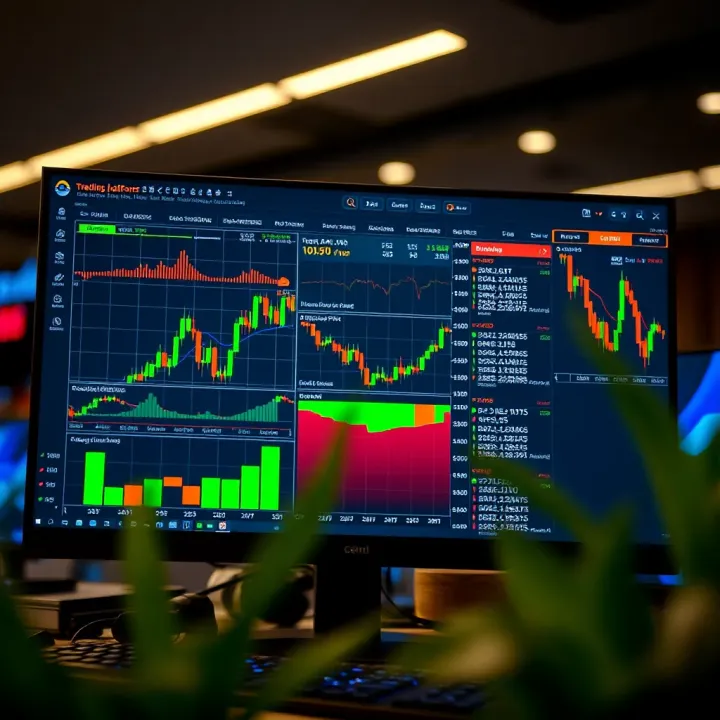
Trading Platforms Guide for Kenyan Investors
📊 Discover how to choose the right trading platform for Kenyan investors. Learn about features, security, fees, and mobile access suited to Kenya's market.
Edited By
Sophie Bennett
Trader derivatives are financial contracts whose value depends on an underlying asset, such as stocks, bonds, commodities, or currencies. In Kenya, derivatives trading remains relatively new but is steadily gaining interest among investors, brokers, and finance professionals looking to manage risks or speculate profitably.
Understanding derivatives is key because these instruments do not involve owning the asset itself; instead, they derive worth from price movements of that asset. For instance, a commodity trader in Kisumu might use derivatives to hedge against fluctuating maize prices during the harvest season, protecting their income from sudden market shocks.
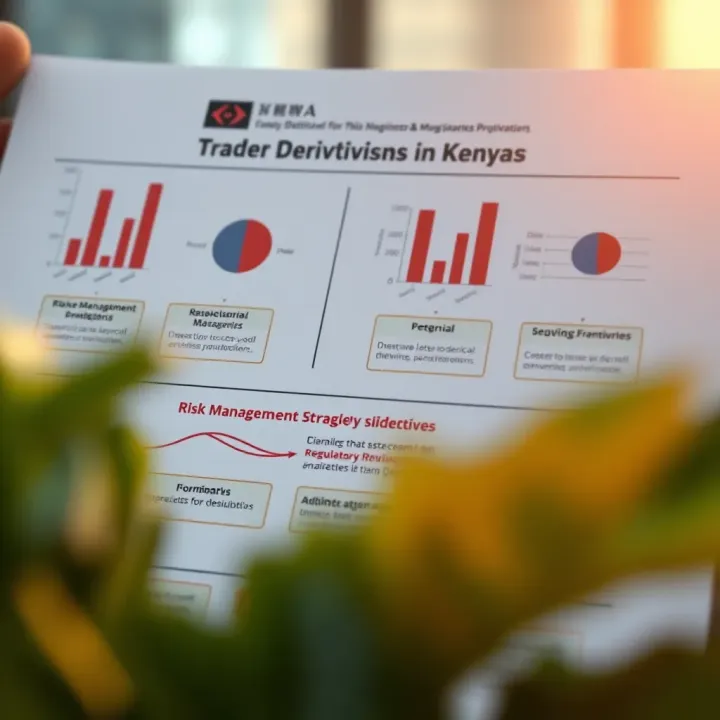
There are four main types of trader derivatives:
Futures: agreements to buy or sell a specific asset at a set price on a future date. An exporter might use futures to lock in the KSh–USD rate ahead of a big payment.
Options: contracts giving the right, but not the obligation, to buy or sell at a pre-agreed price before expiry. Traders can use options to limit potential losses while allowing for gains.
Swaps: contracts where parties exchange cash flows or liabilities, often to manage interest rate or currency risks. Kenyan banks sometimes engage in swap agreements to stabilise foreign exchange exposure.
Forwards: customised contracts to buy or sell assets at a future time, usually traded over-the-counter rather than on exchanges.
Derivatives can help Kenyan investors protect their capital from adverse market moves, but they also come with considerable risks if not well understood or managed carefully.
Trading derivatives demands familiarity with terms like strike price, expiry date, margin, and underlying asset. Without due diligence, traders risk significant financial losses. The Nairobi Securities Exchange (NSE) and Capital Markets Authority (CMA) regulate derivatives trading to protect market participants and foster transparency.
In the Kenyan context, growing internet access, mobile payment platforms like M-Pesa, and expanding financial literacy make derivatives more accessible to retail traders beyond institutional players. Still, the relative complexity means that beginners should seek guidance or start small.
The article will unpack these concepts, explain practical strategies, highlight risks, and walk you through the regulatory environment so you can trade derivatives with confidence in Kenya’s evolving market.
Trader derivatives are financial contracts whose value depends on an underlying asset such as stocks, currencies, commodities or indices. In Kenya, understanding these instruments is key for investors seeking to diversify, manage risk, or explore advanced trading strategies beyond traditional assets like shares or bonds. Derivatives offer practical benefits including price speculation, portfolio hedging, and accessing markets with limited capital.
Unlike traditional assets, derivatives do not represent ownership in a company or physical goods. Instead, they are contracts that derive value from the performance of an underlying asset. For example, owning a share in Safaricom means you hold a stake in the company with voting rights and dividends. A derivative contract on Safaricom stock, on the other hand, lets you bet on the stock price without owning the shares outright. This distinction is crucial because derivatives often allow traders to take positions with less upfront money, but also carry different risks.
At the heart of every derivative is an underlying asset, which can be a stock, currency pair, commodity like coffee from Kenya’s shambas, or an index like the NSE 20 share index. Derivatives are structured as contracts between two parties agreeing to buy or sell the asset at a future date or based on specific price movements. For instance, a futures contract might obligate a farmer to sell maize at a fixed price in three months, helping to lock in revenues regardless of market fluctuations. This connection between contract and asset defines how derivatives are used for hedging or speculation.
Traders use derivatives primarily in two ways: speculation and hedging. Speculation involves betting on price movements to profit, like predicting whether the price of tea exports will rise and buying call options accordingly. Hedging, however, aims to reduce risk by offsetting potential losses in an investment portfolio. For example, a dairy farmer worried about a drop in milk prices might use a derivative contract to secure a minimum selling price, balancing possible declines.
One major appeal of derivatives is leverage, which means controlling a large position with a relatively small amount of capital, called margin. This magnifies potential profits but also losses. If you enter a derivatives trade with KSh 50,000 margin but control assets worth KSh 500,000, even small price changes can lead to significant gains or wipe out your margin quickly. This is why margin calls, where brokers ask for additional funds to cover losses, are common. Understanding leverage is essential to manage risks and avoid liquidation of positions.
Derivatives can open doors to higher returns but require careful handling due to complex risks. Kenyan investors must grasp these fundamentals to trade confidently and safeguard their investments.
Derivatives let traders access diverse assets without full ownership.
Contracts rely on an underlying asset’s price or value.
Traders use derivatives to speculate or protect investments.
Leverage allows bigger exposure but carries higher risks.
Knowing how derivatives work forms the foundation for successful trading in Kenya’s evolving financial markets.
Traders often use derivatives to manage risk or speculate on price movements without directly owning the underlying asset. Understanding the common types of derivatives can help you decide which suits your strategies and market conditions, especially here in Kenya where the market continues to evolve. Common derivatives include options, futures, and swaps. Each comes with unique features that can provide practical benefits such as hedging against price risks or leveraging smaller capital for higher exposure.
Options give the holder the right, but not the obligation, to buy or sell an asset at a set price within a specific time frame. Call options allow buying the underlying asset at a pre-agreed price, which is useful if you expect prices to rise. Conversely, put options grant the right to sell, helpful when you predict prices will fall. Kenyan investors may use these to hedge against fluctuations in shares listed on the Nairobi Securities Exchange (NSE) or safeguard profits during volatile periods.
For example, a trader expecting the price of Safaricom shares to increase could buy call options to benefit from gains without investing the full amount upfront. Similarly, put options might protect a portfolio from losses during uncertain market conditions, such as changes in government policy impacting key sectors like banking or agriculture.
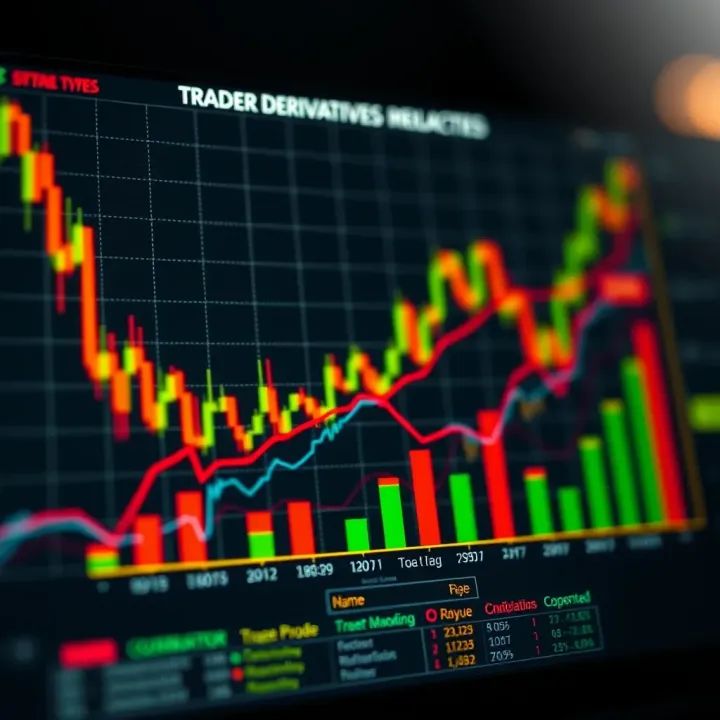
Futures contracts are standardised agreements to buy or sell an asset at a future date for a fixed price. This standardisation allows contracts to be traded easily on exchanges, providing liquidity and price transparency. They are binding and obligate both parties to complete the transaction when the contract expires.
In Kenya, futures are particularly relevant in commodities like tea, coffee, and maize, where farmers and exporters lock in prices early to manage price risk caused by weather or market demand. Financial futures linked to interest rates or currency values also help Kenyan financial institutions and exporters hedge against fluctuations that could affect costs or earnings.
Swaps involve exchanging cash flows or financial instruments between parties and are common among institutional traders and companies. Interest rate swaps let parties swap fixed interest payments for floating rates, helping manage loan costs or investment returns amidst fluctuating Central Bank of Kenya policies.
Currency swaps are increasingly important for Kenyan traders dealing internationally, especially for companies paying suppliers in foreign currency or receiving income in shillings. These swaps reduce exposure to exchange rate volatility between the Kenyan Shilling and currencies like the US Dollar or Euro, helping stabilise cash flow and costs.
Understanding different derivative types helps Kenyan traders tailor their strategies for both local markets and international exposure, improving risk management and opportunities for profit.
Trading derivatives in Kenya presents unique opportunities but also comes with significant risks. Understanding these risks helps investors avoid costly mistakes and manage their exposure sensibly. Derivatives, by design, amplify the effects of price movements, which can translate into quick profits or steep losses. This section highlights the main risks that traders face, focusing on market and credit risks as well as those tied to leverage.
Price volatility is a defining characteristic of derivatives markets. Prices of the underlying assets—be it shares listed on the NSE or commodities like tea and coffee—can swing sharply within short periods. For instance, a sudden change in global coffee prices can heavily impact futures contracts settled in Nairobi. Such volatility increases both profit potential and the risk of rapid losses. Kenyan investors involved in derivatives need to monitor market trends closely and use stops or hedges to protect themselves from sudden adverse moves.
Counterparty risk concerns the chance that the other party in a derivatives contract might fail to meet their obligations. In Kenya’s relatively developing derivatives market, this is especially relevant for over-the-counter (OTC) trades where contracts are private and not always safeguarded by a clearinghouse. For example, an investor entering a currency swap with a foreign firm risks losing if the counterpart defaults. Choosing reputable brokers or dealing on regulated platforms mitigates this risk, but it can never be eliminated.
One attractive feature of derivatives is leverage, allowing traders to control a large position with a relatively small amount of capital. However, this can lead to amplified losses. A small unfavourable movement in the underlying asset can wipe out an investor’s initial margin and even incur additional debts. For instance, a Kenyan investor using margin to trade NSE derivatives might lose more than their deposit if the market suddenly reverses. This creates a double-edged sword situation requiring cautious position sizing and close risk monitoring.
Margin calls and liquidation are natural consequences of leverage but can catch traders off guard. When losses reduce the margin below a required threshold, brokers demand additional funds — a margin call. Failure to meet this quickly often results in forced liquidation of positions at a loss. Such scenarios have affected traders in Kenya especially during volatile market phases or sudden currency devaluations. Keeping extra funds as buffer and having an exit plan helps avoid forced closures that can severely drain capital.
Managing risks in derivatives trading is not about avoiding risk altogether, but recognising and controlling it to protect your investments. Kenyan traders who understand these risks can take steps that balance opportunity with safety, helping them trade smarter in an often unpredictable market.
Having a clear strategy is key to succeeding in derivatives trading. Without one, you risk making hasty decisions that could lead to big losses. When trading derivatives in Kenya, it’s not just about picking the right instruments but also about managing your approach to protect your capital while aiming for reasonable returns.
Long and short positions refer to buying or selling derivatives depending on whether you expect the price of the underlying asset to rise or fall. Taking a long position means you buy a derivative contract hoping the price will increase, allowing you to sell later at a profit. Conversely, a short position means you sell a derivative you don’t own, betting that the price will drop so you can buy it back cheaper. For example, if you expect the price of tea futures to rise because of a poor harvest in Kericho, you might take a long futures position. On the other hand, if you anticipate the Kenyan shilling will weaken against the US dollar, you might take a short position in a currency derivative.
Using derivatives to hedge portfolios is about reducing risk rather than seeking profits. For investors holding stocks or commodities, derivatives provide a way to insure against price swings. Suppose you have a portfolio heavy in agricultural stocks like Sasini or Eaagads; you might use futures contracts to lock in prices ahead of market fluctuations during the dry season. This strategy ensures your portfolio doesn’t take a big hit if prices suddenly fall. Hedging is especially relevant in Kenya’s unpredictable climate, where market volatility can spike around rainy seasons or political events.
Spread trading involves taking simultaneous long and short positions in related contracts to profit from the difference in price movements. For instance, a trader might buy maize futures while simultaneously selling wheat futures, expecting maize prices to rise faster. This technique reduces overall risk compared to outright buying or selling because gains in one position can offset losses in the other. Spread trading is useful in Kenya’s agricultural markets where prices between related commodities often move out of sync due to seasonal factors.
Technical indicators and analytics play a crucial role in guiding trading decisions. Tools like moving averages, Relative Strength Index (RSI), and Bollinger Bands help traders understand market momentum, potential reversals, and volatility. Kenyan traders often combine these with charts of NSE-listed derivatives or forex pairs to time entry and exit points more effectively. For example, spotting a downtrend in Safaricom shares through moving averages might signal a good time to take a short position using options. Analytics add an informed layer to trading instead of relying solely on gut feeling.
Successful derivatives trading isn’t just about picking the right contract but about using the proper strategies to protect your investments and maximise opportunities within the Kenyan market context.
By mastering these basic and advanced approaches, Kenyan investors can navigate the risks and potentials of derivatives more confidently, making informed moves that suit their goals and risk appetite.
Understanding the regulatory environment is essential for anyone involved in derivatives trading in Kenya. Regulations guide how traders, brokers, and other market participants operate, ensuring the integrity and safety of the markets. For Kenyan investors, knowing what rules govern derivatives helps in managing risks and complying with legal requirements.
The Capital Markets Authority (CMA) is the main regulator overseeing derivatives trading in Kenya. It licenses brokers, dealers, and trading platforms that deal with derivatives. Without valid CMA licensing, trading services are not legally recognised, which means investors risk dealing with unregulated entities. For example, a broker operating without CMA approval exposes traders to higher chances of fraud or malpractice.
Besides licensing, the CMA continuously monitors the operations of these market participants to ensure they comply with trading standards and financial prudence. This watchdog role promotes market transparency and reduces systemic risks that could destabilise investor confidence.
The CMA also introduces measures to protect investors, particularly retail traders who might lack deep market knowledge. These protections include setting minimum capital requirements for brokers, ensuring proper segregation of client funds, and enforcing disclosure of all risks involved in derivatives trading.
For instance, if a broker mismanages client funds or violates trading rules, CMA has the power to sanction or even revoke their licence. This reduces chances of investor losses due to unethical behaviour. Moreover, by demanding clear communication on risks and costs, the regulator helps traders make informed decisions.
Traders and brokers dealing in derivatives must meet specific reporting requirements to the CMA. These include regular disclosure of trade positions, margin statuses, and compliance with risk limits. Such reporting helps the regulator monitor for unusual activities like insider trading or market manipulation.
From a practical viewpoint, meeting these obligations means traders should keep thorough records and report timely. Failure to comply can lead to penalties or suspension, which could disrupt trading activities and damage reputations.
The CMA insists that all derivative trading entities disclose the risks associated with these products fully and clearly. This includes price volatility, leverage dangers, and potential for margin calls.
For Kenyan traders, clear risk disclosure means you should expect your broker to explain not just possible gains but also downsides, including worst-case scenarios. This transparency plays a big role in preventing surprises when markets move sharply. It also supports responsible trading amid the often unpredictable nature of derivatives markets.
A well-regulated derivatives market benefits everyone by fostering trust and encouraging fair play. Kenyan investors should prioritise trading through CMA-licensed entities and always pay attention to risk disclosures and reporting standards.
Starting with derivatives trading in Kenya calls for a clear understanding of where and how to begin. This section is vital because the Kenyan market has unique dynamics, regulatory requirements, and platform options that shape your trading journey. You want to choose a broker you trust, know which platforms serve Kenyan traders well, and pick up practical habits like managing your capital and learning consistently.
Selecting the right broker is more than just paying attention to fees or advertising. In Kenya, it's especially important to check that the broker is licensed by the Capital Markets Authority (CMA). This licence ensures the broker operates under regulations designed to protect you as an investor. Look for transparency on commissions, clear terms around margin and leverage, and solid customer support that responds quickly if issues arise.
Also, consider whether the broker supports popular payment options like M-Pesa or bank transfers for easy deposits and withdrawals. If you're trading derivatives like futures or options, ask about their margin requirements and whether they provide tools such as risk calculators or market news updates.
Kenyan traders often use platforms like MetaTrader 4 or 5 for forex derivatives, plus local brokerage platforms that connect to NSE-listed derivatives and commodities. For example, some brokers offer online portals integrated with M-Pesa or KCB banks for seamless transactions. These platforms usually provide real-time price feeds, charts, and the ability to place various order types.
Mobile trading apps also matter in Kenya due to widespread smartphone use. Platforms with reliable mobile apps help you stay connected to the market even when you’re on the move, say on a boda boda ride or waiting for your matatu.
Managing your capital carefully is key when trading derivatives because of the leverage involved — losses can multiply quickly. Start by setting aside a specific amount of money you can afford to lose without affecting your day-to-day life. Avoid chasing losses by increasing position sizes; instead, use stop-loss orders to cut risk at acceptable levels.
It’s also wise to diversify your trades and not put all your money into one contract or market. For instance, instead of betting everything on a maize futures contract, consider a mix of agricultural commodities and financial options.
Before risking real money, new traders should leverage practice accounts or demo platforms offered by many brokers. These simulate real market conditions without financial risk and are excellent for testing strategies.
Besides hands-on practice, tap into reputable Kenyan financial news outlets, trading courses, and webinars from CMA-recognised institutions. Forums or investor groups can provide insights too, but always cross-check information before acting.
Starting trading without understanding the platform, broker credibility, or risk management is like walking blind—proper preparation helps protect your investment and improve chances of success.
Taking these steps will put you on solid footing as you begin trading derivatives in Kenya's markets. Remember, trading is a skill developed over time, so patience and discipline pay off in the long run.
📊 Discover how to choose the right trading platform for Kenyan investors. Learn about features, security, fees, and mobile access suited to Kenya's market.
📊 Learn forex trading basics, market tips, and risk strategies tailored for Kenyan investors. Start smart, avoid common pitfalls, and grow your KSh portfolio today!
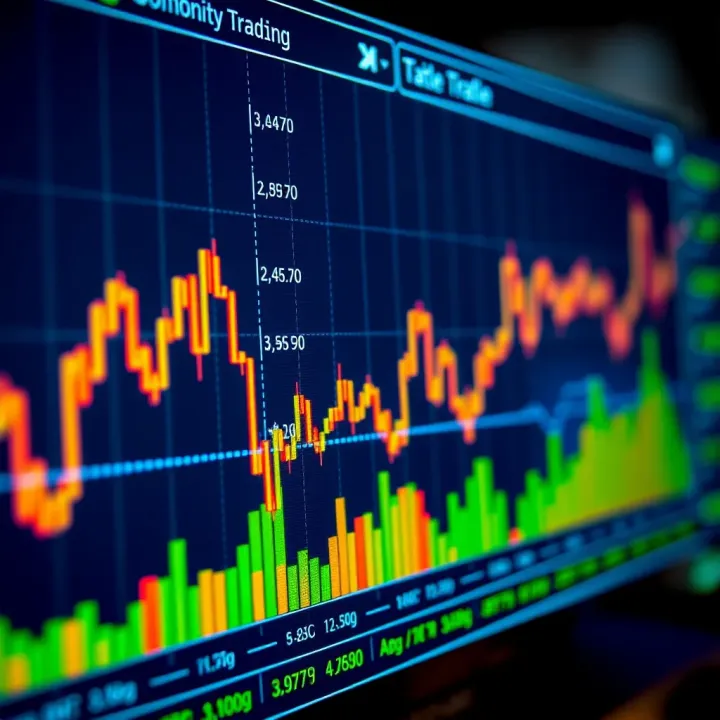
📈 Explore commodity trading in Kenya with practical tips on key markets, trading platforms, local trends, risks, and how to seize opportunities for better returns.

🚀 Explore top trading apps suited for Kenyan investors! Learn about M-Pesa payments, local regulations, benefits, risks, and how to pick the best platform for you.
Based on 14 reviews