

Understanding the Volatility Index for Kenyan Investors
📈 Understand the Volatility Index to track market shakes and investor mood in Kenya. Learn how this tool helps manage risks and guides smarter investing decisions.
Edited By
Thomas Green
The Volatility 100 Index is a financial instrument that measures how much prices in a market fluctuate over a certain period, but instead of relying on traditional assets like stocks or commodities, it simulates these movements using algorithms. This makes it popular among traders wanting exposure to market swings without owning physical assets.
For Kenyan traders and investors, understanding this index is important because it offers a different way to tap into market changes. It’s especially useful for those who prefer short-term trading or want to diversify their portfolio beyond usual shares and forex pairs.
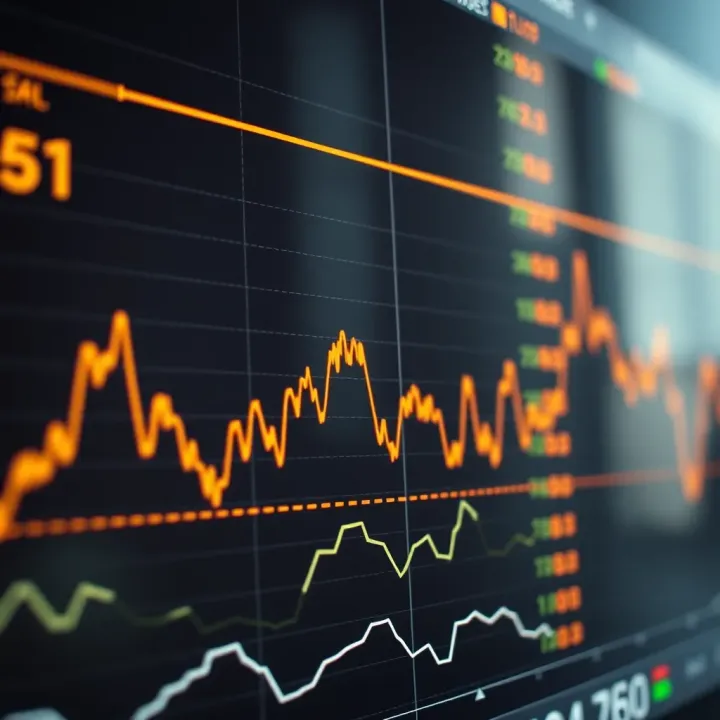
The index behaves differently from typical markets. Its value doesn’t depend on company profits or economic news but on volatility itself — in other words, how rapidly and widely prices move up and down. Because of this, price swings can be quick and sharp, requiring careful attention to timing and market behaviour.
Monitoring a live chart of the Volatility 100 Index gives you an edge. You can see real-time price changes, spot emerging trends, and make decisions based on actual market action, not delayed reports.
It tracks simulated market volatility on a scale from 0 to 100.
Prices are generated to reflect the level of volatility rather than supply-demand fundamentals.
Traders can buy or sell depending on whether they expect volatility to increase or decrease.
Because it isn’t tied to a country or company, external factors like geopolitical events or economic releases influence it differently than traditional markets. However, knowing the Kenyan market context and global risk events helps anticipate broader movements.
For accurate, up-to-date information, Kenyan traders often rely on platforms like Deriv or similar brokers offering live charts. These platforms update the Volatility 100 Index price every second, showing candlestick or line charts useful to analyse short-term trends. Many also offer tools like moving averages and RSI, helping you to interpret market momentum.
Overall, following a live chart allows you to react quickly to changing conditions, which is essential given how fast the index can move.
Understanding these basics makes it easier to grasp more advanced strategies and risk management techniques specific to trading the Volatility 100 Index in Kenya’s dynamic financial environment.
The Volatility 100 Index is an intriguing trading instrument that captures the magnitude of market price swings rather than tracking a particular set of stocks or commodities. Understanding this index is vital for traders and investors who want to explore alternatives beyond traditional assets. This section explains what the index represents, how it differs from typical stock indices, and why it draws interest in trading circles.
The Volatility 100 Index is a synthetic index designed to simulate market volatility with a fixed two-minute window of price fluctuations. Unlike ordinary indices which track the actual prices of listed companies or commodities, this index replicates how volatile an asset might behave under certain market conditions, even if those conditions don’t exist in the real world at that moment. This synthetic nature allows it to operate 24/7, unaffected by market holidays or trading hours, making it especially practical for traders in different time zones or those who want to trade outside typical sessions.
What sets it apart from traditional stock indices is its origin in algorithmically generated data rather than real trades on exchanges. For example, while the NSE 20 tracks the performance of the top Nairobi Securities Exchange companies based on real transactions, the Volatility 100 reacts to programmed patterns that mimic market activity. This difference means you’re not buying a stake in actual companies but speculating on the intensity of price movements in a controlled environment.
Traders are drawn to instruments like the Volatility 100 Index because it offers the chance to profit from market ups and downs, regardless of the direction. Volatility itself is a measurement of uncertainty or risk – the more volatile the market, the greater the price swings. By focusing on volatility, traders can take positions expecting either sharp increases or decreases, which can provide opportunities even during flat or sideways markets, when regular stocks may offer little movement.
Volatility-based products open up several opportunities not found in traditional trading. For instance, Kenyan traders can engage through platforms compatible with M-Pesa, allowing easy account funding and withdrawals—a vital convenience. The index’s frequent and predictable cycles also allow for short-term trading strategies, such as scalping or day trading, to capitalise on quick price jumps. Moreover, the index provides constant volatility data, useful for hedging other investments or diversifying portfolios in markets where local stocks might be too stable or slow-moving.

The Volatility 100 Index stands out as a flexible tool for those wanting exposure to market dynamics without the barriers of standard trading hours or complex asset selection.
In summary, grasping what the Volatility 100 Index represents helps traders make informed decisions, setting the stage for the rest of this article on how to track and trade it effectively in the Kenyan context.
Understanding what drives the Volatility 100 Index is key for traders seeking to use it effectively. This index behaves differently from typical stocks due to its synthetic nature, so knowing the external and internal factors that push its price up or down can improve trading decisions and timing. These factors include global market volatility triggered by economic events, as well as the behind-the-scenes mechanics programmed into the index’s creation.
Global events often shift market sentiment, and this ripple effect reflects strongly on the Volatility 100 Index. For example, when geopolitical tensions rise—such as trade disputes between major economies or sudden policy changes—the perceived risk spikes. This increases volatility across markets, causing the index to move sharply. Traders watching the index gain clues about sudden market nervousness or calm.
The index’s responsiveness to such events is practical for those wanting to hedge against risk or profit from market swings without investing in traditional assets. During the COVID-19 outbreak, for instance, spikes in global uncertainty caused noticeable jumps in volatility indices worldwide, proving their sensitivity to world affairs.
The Volatility 100 Index also correlates with various economic indicators. High inflation reports, central bank interest rate decisions, and employment data releases tend to influence investor anxiety, which the index captures in its price movements. When Kenyan traders note shifts in inflation figures or Central Bank of Kenya (CBK) policies, they can anticipate shifts in the index accordingly.
This connection provides a window into real-world economic conditions without tracking countless individual stocks. By observing these correlations, traders align their strategies with broader economic trends and avoid surprises from sudden market moves.
Unlike typical stock indices driven by company performance, the Volatility 100 Index works on algorithms simulating market conditions. These algorithms model price swings using complex mathematical functions meant to mimic real market volatility but without direct ties to physical securities. This synthetic design means the index reflects volatility itself, independent of specific assets.
Understanding this aspect is crucial since it explains why traditional stock market events might not affect this index directly. Instead, programmed responses in algorithms generate its unique price behaviour. For example, increased simulated risk could prompt larger price moves within the index even when actual stock markets stay steady.
Another important feature is the index’s availability beyond normal trading hours. Because its movements are algorithm-driven and simulated, the Volatility 100 Index can remain active 24/7. This contrasts with many stock exchanges in Kenya and globally, which have fixed opening and closing times.
For traders, this means opportunities to follow and trade the index at any hour, including evenings or weekends when traditional markets are closed. It also means Kenyan investors can react quickly to international news breaking outside local exchange hours, using platforms that provide live charts and real-time data.
Familiarity with both global influences and the index’s synthetic nature helps traders act decisively and understand why the Volatility 100 Index moves the way it does, ensuring they can better manage risk and time trades.
By focusing on these factors, Kenyan traders stand a better chance of making informed moves with this unique financial tool.
Getting timely access to the Volatility 100 Index live chart helps traders react quickly to price swings, especially in a market as fast-changing as this. Real-time data allows you to spot entry and exit points more effectively, reducing guesswork and enabling smarter risk control.
Several Kenyan and international trading platforms offer live data on the Volatility 100 Index. Popular options include Deriv, which is well-known for its synthetic indices and is accessible to Kenyan traders. International platforms like IG and Saxo Bank also feature live Volatility 100 charts, providing diverse charting tools and smooth execution. Using trusted platforms ensures the data is accurate and free from delays, which is vital for quick decision-making in volatile markets.
These platforms often feature user-friendly interfaces that work seamlessly across devices. Whether you trade on a desktop in Nairobi’s CBD or on your mobile phone while commuting, these sites provide instant chart updates. This device compatibility means you can keep tabs on the index whether you are at home, at the shamba, or waiting in traffic, ensuring you never miss a price movement.
Understanding price action is fundamental when reading the Volatility 100 Index chart. Candlestick patterns show the direction and intensity of price moves within short periods. For instance, a long green candle signals strong buying pressure, while a doji candle suggests indecision and potential reversal. Knowing these patterns helps you time your trades better in the fast-moving synthetic market.
Indicators also enhance chart interpretation. Commonly used indicators on the Volatility 100 Index include the Relative Strength Index (RSI), which signals overbought or oversold conditions, and Moving Averages (MAs) that smooth past prices to highlight trends. Combining indicators like RSI and MA can help confirm when momentum is building or fading, giving you an edge in deciding when to enter or exit positions.
Effective use of live charts by understanding key price actions and indicators can improve your trading accuracy and help manage risks in the volatile synthetic index environment.
By choosing reliable platforms accessible on your preferred device and focusing on essential chart elements, you position yourself to navigate the Volatility 100 Index with greater confidence and precision. This practical approach is crucial for any Kenyan trader serious about engaging with this dynamic market.
Knowing how to trade using the Volatility 100 Index chart helps you react faster to market movements, especially since this index is known for its fast price swings. Without good tips and practical advice, you risk entering or exiting trades at the wrong time, which can lead to losses. The chart shows patterns that traders can use to identify profitable moments and also spot when the market might turn against them.
Learning how to pick entry and exit points is a skill every Volatility 100 trader must develop. For example, when the chart shows a clear upward spike supported by strong candlestick patterns, that could signal a good moment to buy. Conversely, if signs like sharp reversals or high volatility bursts appear, those could be exit indicators. Kenyan traders often watch for confirmation from volume or other technical signals before jumping in, to reduce risks.
Because the Volatility 100 Index moves quickly, managing your risk well is vital. It’s wise to set tight stop-loss orders to limit losses, as prices can reverse in seconds. Also, avoid risking more than 1–2% of your trading capital on a single trade. Some traders use trailing stops to protect profits as the market moves favourably. These methods help you survive the ups and downs typical of synthetic volatility markets.
Kenyan economic events, such as CBK rate announcements or political developments, influence traders’ sentiment globally and can reflect on volatility indirectly. Being aware of such local news helps you avoid unexpected surprises. For instance, during election periods, volatility tends to increase, so trading volumes and price fluctuations may become more unpredictable. Keeping an eye on local business news and economic indicators sharpens your decision-making.
One practical advantage for Kenyan traders is the use of M-Pesa and similar mobile money services to fund trading accounts or receive withdrawals quickly. This convenience allows you to move in and out of positions without delays that could affect your trading outcomes. Quick access to funds lets you react immediately to chart signals and settle trades on time, which is crucial in volatile markets.
Successful trading on the Volatility 100 Index depends on both understanding chart signals and adapting those to local realities like economic events and payment methods. Combining these elements increases your chances of making consistent profits.
By applying these tips, Kenyan traders can better handle the speed and shifts of the Volatility 100 Index and make their trades smarter and more secure.
📈 Understand the Volatility Index to track market shakes and investor mood in Kenya. Learn how this tool helps manage risks and guides smarter investing decisions.
📉 Learn how the Volatility 75 Index tracks market changes, what drives its moves, and how Kenyan investors can use it wisely to grow their KSh portfolios safely.
📉 Learn how forex volatility affects currency price swings and trading strategies in Kenya. Manage risks and seize opportunities in the dynamic forex market today.

Explore how Deriv's live chat 📱 makes support easy for users in Kenya 🇰🇪. Get tips, understand queries handled, and improve your experience now.
Based on 9 reviews